EphraimHill DC- Monthly Civic Data Intelligence | August 2026 | By Idowu Ephraim Faleye
August 2026 was a month when Nigeria’s information environment leaned strongly toward risk. More than half of the stories tracked during the month carried a negative tone, while security concerns across places such as Katsina, Kaduna and Borno dominated some of the most serious headlines. At the same time, political activity was already beginning to take a different shape as politicians and political actors gradually shifted attention towards the 2027 election cycle. When these developments are viewed together, August 2026 was not simply a month of individual crises. The data suggests a country dealing with several pressures at the same time, with security, politics, governance and public confidence competing for attention.
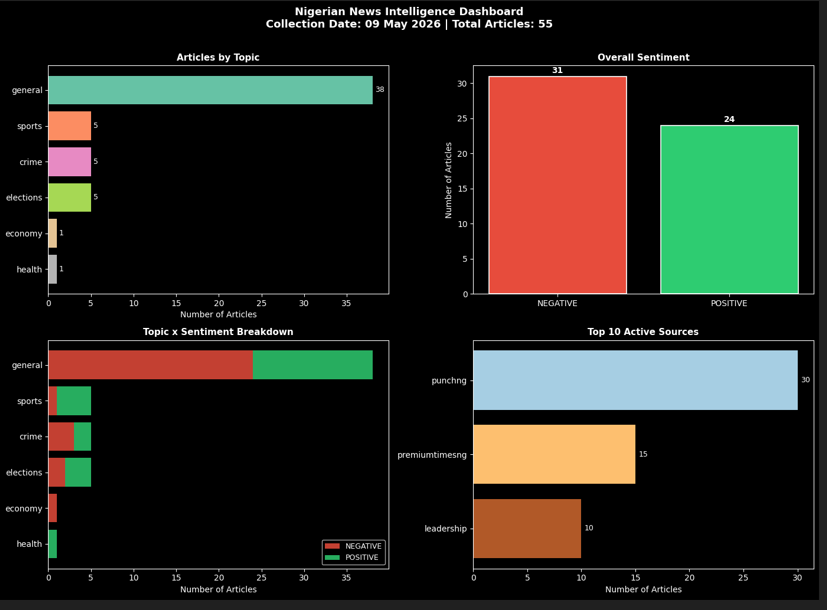
EphraimHill DC’s data pipeline processed 1,854 articles from 24 different sources during the month. The average risk score was 0.487, which is slightly below the midpoint of the risk scale, but that average does not tell the whole story. A closer look shows that 86 articles were classified as CRITICAL risk, while another 335 were classified as HIGH risk. Together, these two groups made up almost one-quarter of all the stories monitored. Another 944 articles were classified as MEDIUM risk. In other words, August was not defined by a few isolated emergencies; the data point to a sustained level of pressure across the news cycle. The sentiment figures support this conclusion. Of the 1,854 stories, 1,023, or 55.2 percent, carried negative framing, compared with 831, or 44.8 per cent, with positive framing. The difference may not look dramatic at first glance. Still, it is large enough to show that negative coverage was spread across the information environment rather than being driven only by a few major crisis stories.
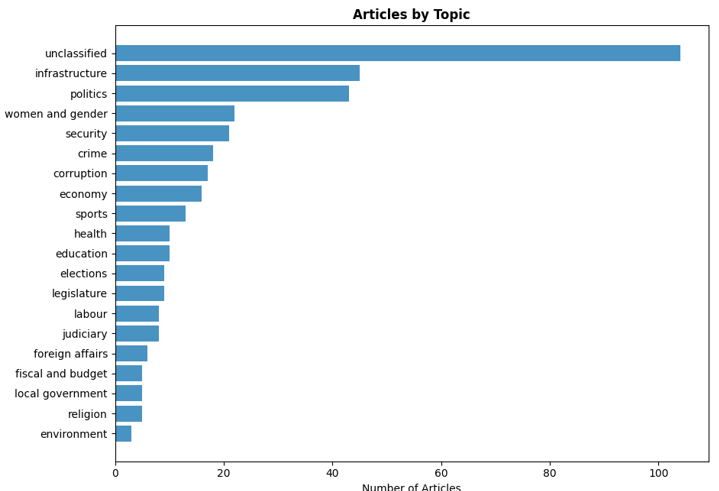
The topic distribution gives us another useful way of understanding the month. Politics remained the largest clearly classified topic, producing 416 articles, which is not surprising considering the gradual movement towards the 2027 political season. What is important, however, is that politics was not the only major conversation. A further 472 stories fell into the unclassified category. Rather than treating this simply as a limitation of classification, it can also be read as information about the diversity of the news environment. These stories covered a wide range of issues, including Navy interdiction operations, entertainment and other subjects that did not fit neatly into the main categories. Infrastructure concerns accounted for 194 articles and were closely connected in the dataset to security incidents, particularly in the northern parts of the country. Women and gender issues recorded 107 articles, while the economy accounted for 88, security 73 and elections 69. Corruption and health also remained visible with 60 and 52 articles respectively, while crime recorded 50 and foreign affairs 49. Sports accounted for 45 articles, showing that even during a month dominated by serious security and political concerns, Nigerians were still consuming stories outside the traditional governance and crisis space.
Read Also: Frozen Accounts, Fiery Politics: How the EFCC Standoff Changed the Osun Election Story
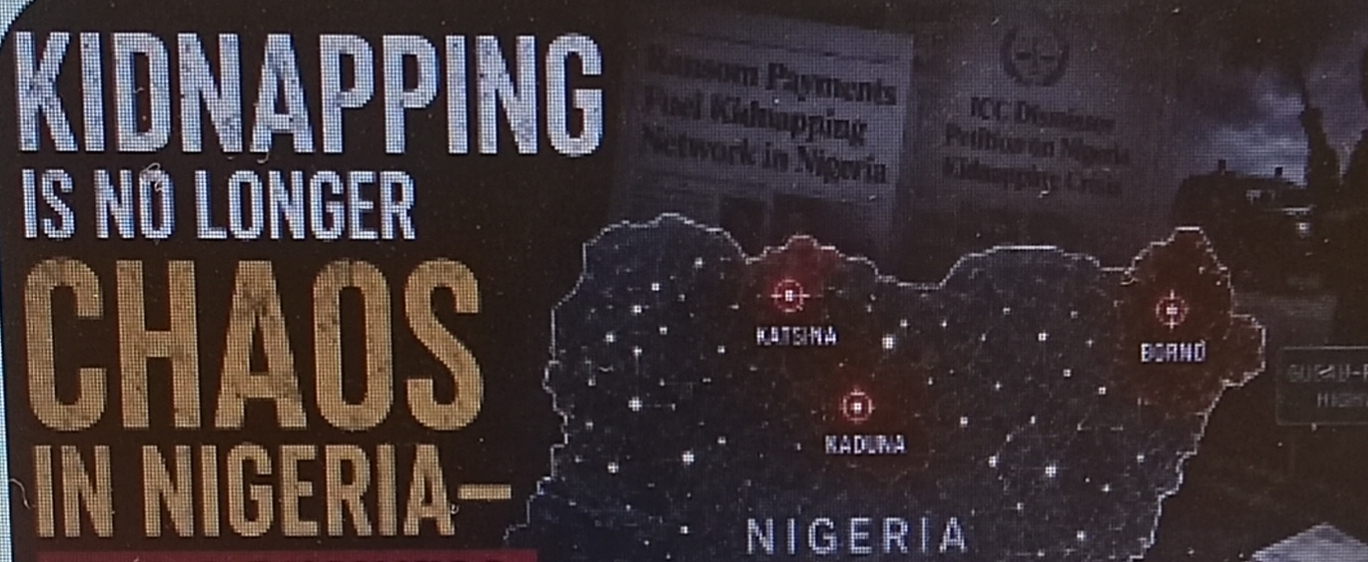
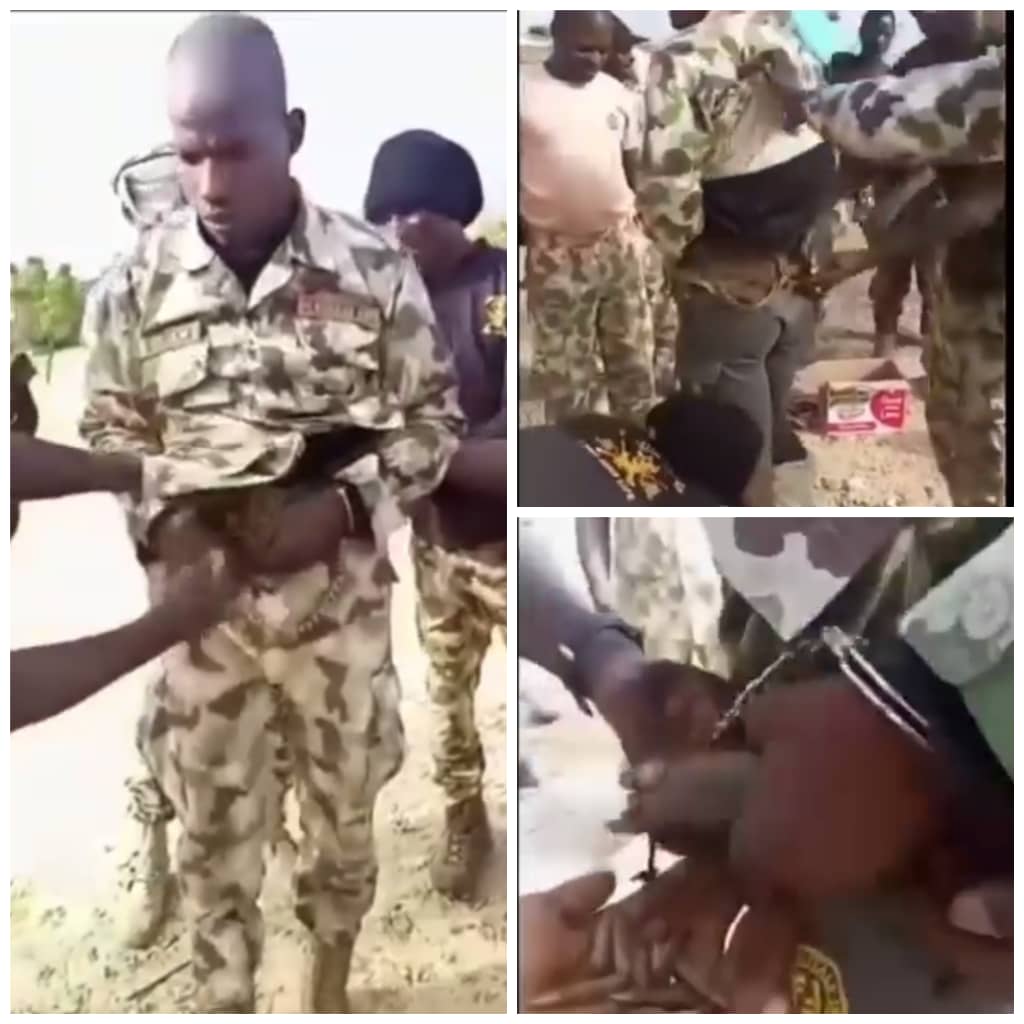
When we move from the numbers to the stories behind them, security clearly emerges as the strongest risk narrative of the month. Much of this story was built around banditry and kidnapping in the North-West and North-East. One of the CRITICAL-risk stories involved the attack on a wedding convoy travelling between Katsina and Kebbi, where armed men abducted travellers. This is significant because it takes the security conversation away from statistics and puts it in a situation ordinary Nigerians can easily understand: people travelling for a wedding were exposed to the same insecurity that has affected other forms of movement across parts of the North. But the data also shows that the state and community security structures were not standing still. During the same period, police operations reportedly led to the arrest of 161 suspects and the rescue of 95 kidnapping victims. Another critical story focused on the “battle at Bakori” and the role played by the Katsina Community Watch Corps, while a military operation in Borno reportedly prevented an abduction and rescued 31 people. The surrender of an ISWAP commander’s wife and son was also reported as part of that operation. Taken together, these stories tell a more complicated story than simply saying that insecurity was getting worse. They show a country where attacks and responses were taking place at the same time, involving the military, police and community-level security structures.
The international dimension of the security story was also important. The United States condemned the killing of 30 people in Kaduna, with a US official referring to the situation as “Middle Belt violence.” That development matters because it shows that Nigeria’s security challenges are no longer being discussed only within the country’s domestic information space. They are increasingly becoming part of conversations with foreign governments and international partners. From a data intelligence perspective, this kind of shift deserves attention because international interest can influence diplomatic conversations, development priorities and the way Nigeria’s security situation is understood outside the country. A story that begins as a local security incident can therefore develop into a much wider governance and foreign-relations issue.
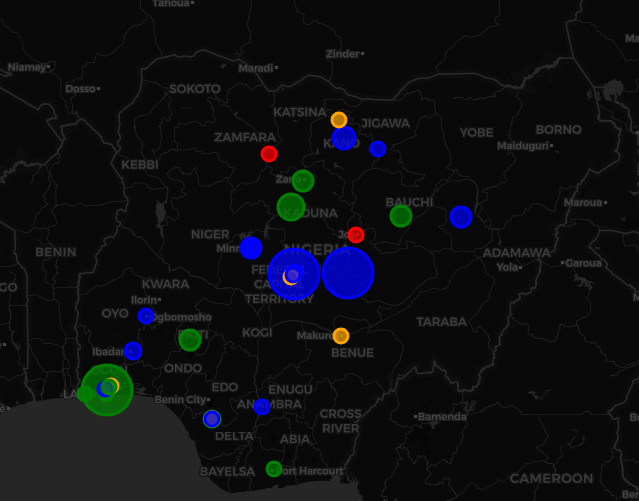
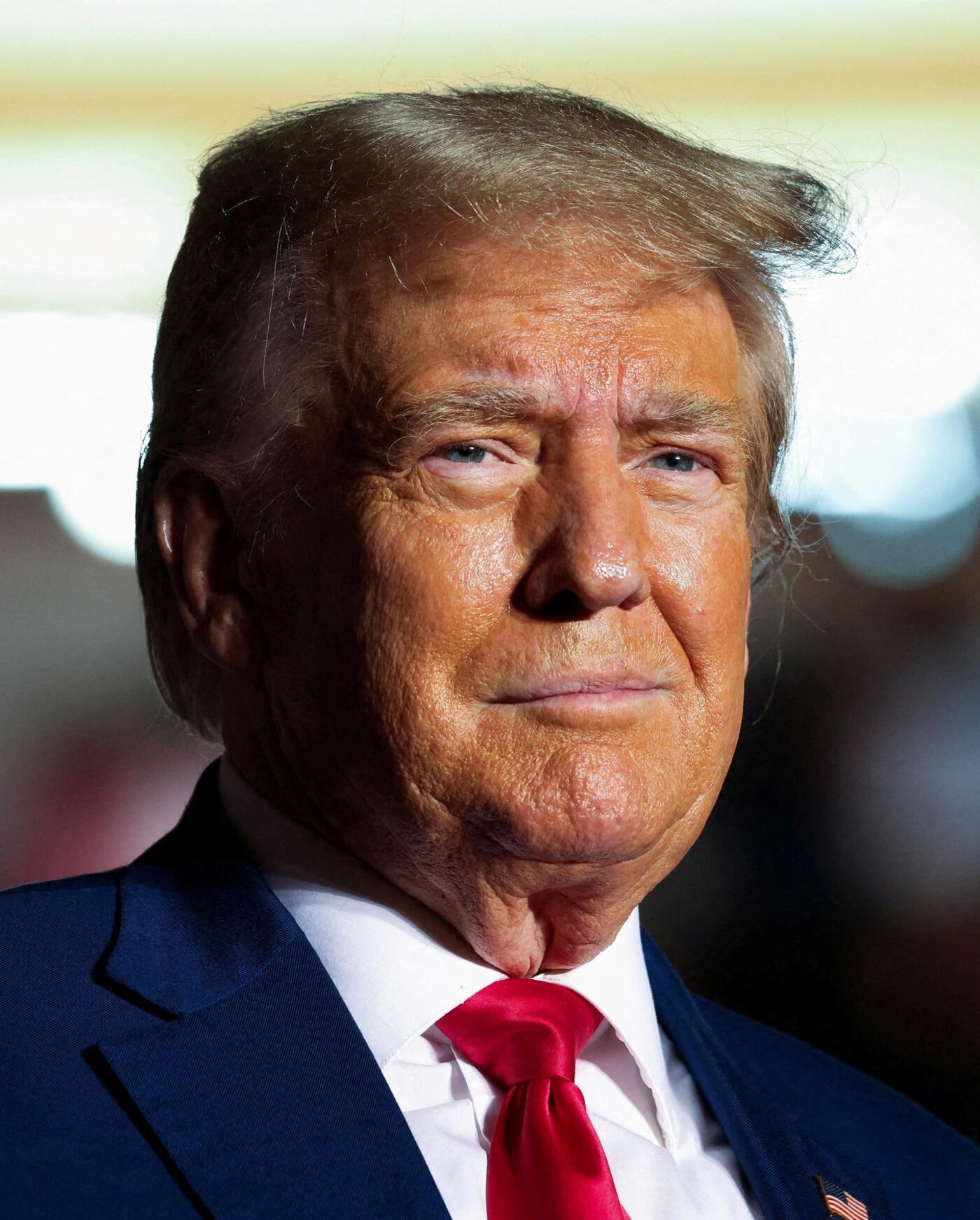
The geographical pattern in the data reinforces this picture. Nigeria itself appeared in 469 mentions, which is expected because it is the central focus of the coverage. But the more useful insight comes from looking beneath the national figure. Abuja recorded 133 sub-national mentions, reflecting its position as the centre of political and policy activity. Lagos followed with 114, which reflects its importance as Nigeria’s commercial and media centre. The United States recorded 100 mentions, an unusually high level for a foreign country, largely because of the Kaduna killings and wider diplomatic engagement. Donald Trump alone appeared in 23 mentions. Osun State recorded 72 mentions, while Osogbo recorded another 42. This combination suggests that Osun remained an important sub-national political story during the month. Kaduna recorded 56 mentions, which further confirms its importance to the security narrative. Africa, the United Kingdom and Europe recorded 67, 31 and 28 mentions respectively, showing that although most of the coverage remained domestic, there was still a measurable international dimension to Nigeria’s August news environment.
Read Also: Tinubu’s Rainbow Coalition Is Outpacing Nigeria’s Opposition -And the Data Proves It
Looking at the month as a whole, the available evidence suggests that the security risk was not concentrated around one particular week or one isolated incident. The Katsina-Kebbi convoy attack, the Bakori operation, the Borno rescue and the Kaduna killings occurred across different security theatres. This matters because it points towards a rolling security problem rather than one single crisis that could be expected to disappear after one major intervention. The data also flagged an article discussing “issues in new army formations” within the CRITICAL-risk category. That deserves particular attention because it introduces an institutional dimension to the security discussion. While operational incidents tell us what is happening on the ground, questions about the structure and effectiveness of security institutions tell us something about the capacity of the system to respond over time. When both types of stories appear in the same high-risk environment, decision-makers should be asking not only how many operations are taking place, but also whether the institutions responsible for those operations are adequately organised and equipped to deal with the problem.
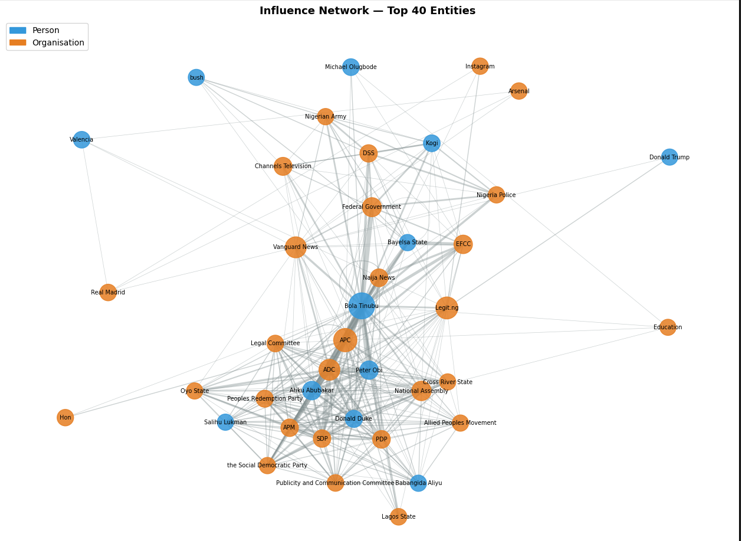
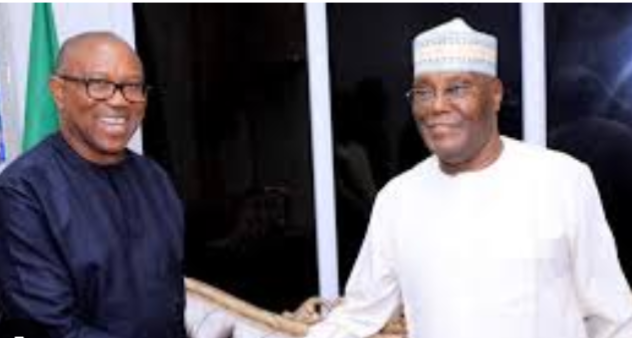
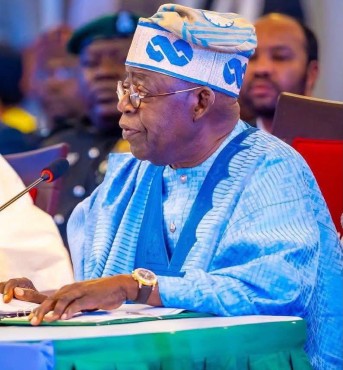
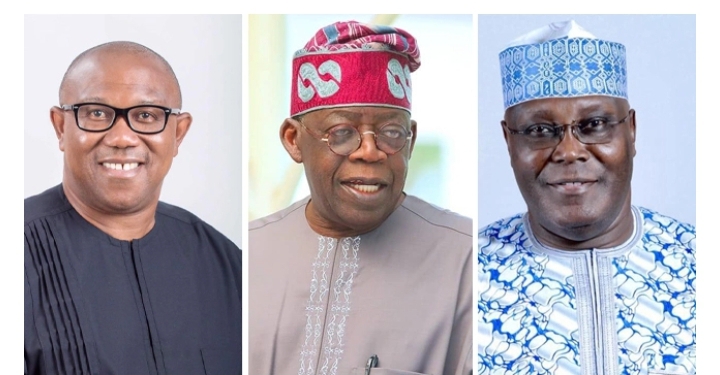
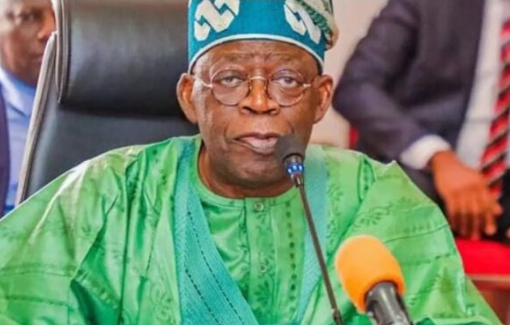
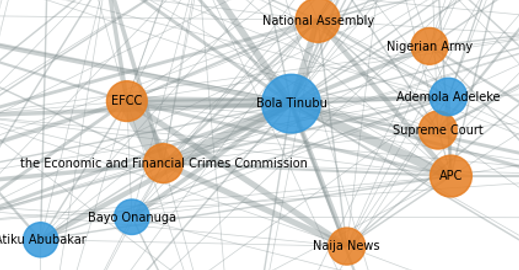
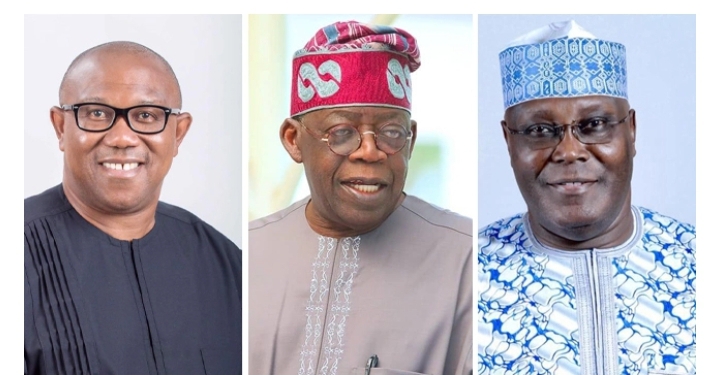
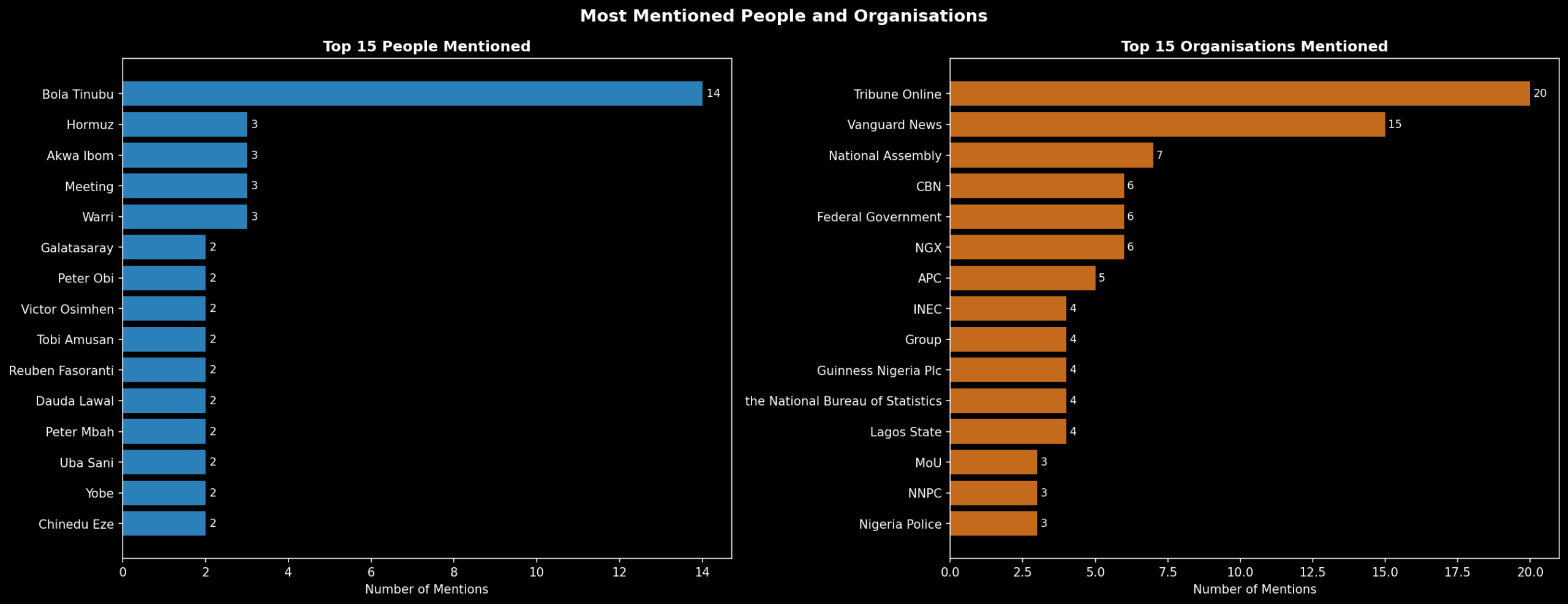
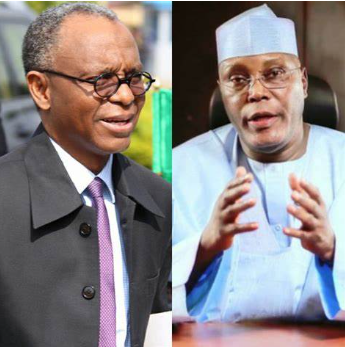
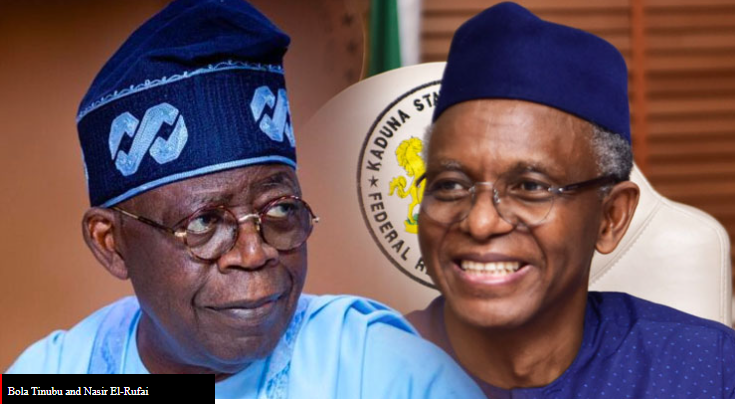
The political data tells a different but equally important story. President Bola Tinubu was by far the most mentioned individual during August, appearing in 309 articles. That is more than twice the figure recorded for the next most-mentioned individual and is consistent with the growing political attention around the 2027 election cycle. His coverage was not entirely positive, however. The pipeline captured critical-level political stories involving criticism of his record and questions about his academic credentials. The data also recorded renewed comments by former President Olusegun Obasanjo concerning Atiku Abubakar and his past selection as a running mate. Osun State Governor Ademola Adeleke followed Tinubu with 157 mentions, making him one of the strongest sub-national political figures in the month’s data. Atiku Abubakar recorded 91 mentions, while Peter Obi recorded 55. Nyesom Wike and Vice President Kashim Shettima had 34 and 27 mentions respectively.
However, one of the interesting things about this political data is what appears outside the political class. Davido recorded 26 mentions, and Lionel Messi recorded 17. At first, these figures may seem unrelated to a political intelligence report, but they tell us something important about how Nigerians consume information. The public is not reading only about presidents, governors, opposition leaders and elections. Entertainment and sport continue to attract significant attention, even during a month when security and politics dominate the serious news agenda. For organisations planning public communication, this is an important reminder. Reaching citizens is not simply about producing more political messages; it is also about understanding what else is competing for their attention. A communication strategy that looks only at political conversations may therefore miss a significant part of the public’s actual information diet.
Another important finding from August is the way the media framed events. Much of the coverage was incident-driven rather than process-driven. For example, the Navy’s seizure of 87,000 litres of illegally held fuel in Rivers State was reported as an enforcement event, while the Kaduna State government’s reaffirmation of its commitment to strengthening its security network was treated largely as a separate policy announcement. The problem with this style of reporting is that each event can appear as though it exists on its own. The public hears about an arrest today, a rescue tomorrow and a new government commitment the next day, but may not have enough information to understand whether these actions are producing measurable improvement over time. From a data intelligence perspective, this is important because effective governance should not be assessed only by counting individual activities. What matters is whether those activities are changing the underlying problem.
This is why one of the strongest signals from August is the coexistence of visible state response and continued public vulnerability. The same month in which armed men attacked a civilian wedding convoy also produced the arrest of 161 suspects, the rescue of 95 kidnapping victims and another operation that rescued 31 people. These figures do not support a simple conclusion that the security situation is either completely out of control or already under control. Instead, they point to a system in active contest, where security agencies and community structures are responding while threats continue to emerge. That distinction is important for policymakers because it changes the question from “Is the government responding?” to a more useful question: “Is the response strong enough, consistent enough and effective enough to reduce the problem over time?” That is the kind of question that longitudinal data can help answer.
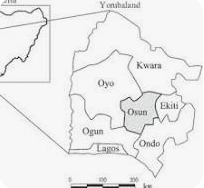
The Osun story also deserves to be treated separately from the wider national political narrative. The state appeared strongly in both the geographic and political data, with 72 mentions for Osun State and another 42 for Osogbo. This suggests that Osun was not simply being mentioned because of its connection to national politics; it had developed into a story of its own. For organisations monitoring Nigeria’s political environment ahead of 2027, this is a signal worth following closely. State-level political developments can become national issues very quickly, particularly when the actors involved are already prominent at the national level. Monitoring them early therefore gives decision-makers a better chance of understanding where a political narrative is heading before it becomes a major national conversation.
Three practical recommendations emerge from the August evidence. First, the concentration of CRITICAL-risk stories around Katsina, Kaduna and Borno, combined with public discussion about “issues in new army formations,” suggests that attention should go beyond immediate security operations to the wider structure and capacity of the security system. Community security initiatives, such as the role played by the Katsina Community Watch Corps in Bakori, should be studied carefully as part of the broader security response. Such structures should not be seen as replacements for the military and police, but their successes and limitations may provide useful lessons about how local knowledge and community participation can complement formal security institutions. Second, the level of American attention to the Kaduna killings suggests that security governance is likely to remain an important subject in Nigeria’s engagement with international partners. Third, the sustained prominence of Osun State means that organisations interested in the 2027 political cycle should strengthen their Osun-specific monitoring now rather than waiting until the election draws closer.
As we move into September, the first issue to watch is whether the security pattern observed in August begins to stabilise or deteriorate. The North-West and North-East security stories do not point to one single event that can be described as a resolution. What we are seeing instead is a continuing cycle of attacks, arrests, rescues and security interventions. The question for September, therefore, is not simply how many incidents occur, but whether the response is beginning to change the frequency, severity and geographical spread of those incidents. Any further discussion around the effectiveness of new army formations will also deserve close attention because it could provide a window into the institutional side of the security challenge.
The political environment is likely to become even more active as the 2027 cycle develops. The level of attention around President Tinubu, combined with criticism of his record and credentials and the renewed exchanges involving Obasanjo and Atiku, suggests that political positioning is already underway. These conversations are likely to become more intense as political actors attempt to define the president’s record and shape public expectations before the election season reaches its peak. At the same time, Osun’s continued political visibility deserves close monitoring, particularly because state-level political developments can influence wider national alliances and narratives. Kaduna’s security situation and the direction of US-Nigeria engagement on security should also remain on the September watchlist.
Yet, there is another part of the August data that should not be lost simply because security and politics produced the strongest headlines. Nigerians were also paying attention to culture, entertainment, sport and human-interest stories. The death of popular juju musician St. Janet, tributes to Margaret Idahosa on her 83rd birthday, the Awolowo Foundation’s opening of nominations for its 2026 Leadership Prize and the widely shared video of a wedding guest giving ₦10 million to Peller and Jarvis all moved through the same information environment as the Katsina convoy attack and the Kaduna killings. This contrast is important because it reminds us that the Nigerian public does not experience the news as one single story. People can be concerned about insecurity and politics while also following entertainment, celebrating cultural figures, watching sports and sharing stories that inspire or entertain them. Any organisation seeking to communicate effectively with the public must therefore understand this wider competition for attention.
Ultimately, the August 2026 numbers demonstrate why data intelligence matters. If we looked at only one day’s headlines, we might see a kidnapping story, a political argument, a military operation or a government announcement and treat each one as a separate event. But when 1,854 stories from 24 sources are processed, classified and examined together, a much clearer picture begins to emerge. We can see the concentration of risk, the direction of sentiment, the subjects attracting attention, the people and places appearing most frequently, and the issues that continue to return despite individual interventions. This is the value of the EphraimHill DC approach: moving beyond the daily noise of the news cycle to identify patterns that can help decision-makers understand not only what happened, but what the data may be telling us about where the country is heading.
EphraimHill DC is Nigeria’s civic data intelligence platform, where we track, analyse, and interpret national developments to help Nigerians understand the deeper patterns behind public events. Our analysis is institutional, evidence-based, and politically neutral.
August 2026 | Intelligence Pipeline Output

























![The Trend of Insecurity in Nigeria. [Part 2]](https://ephraimhilldc.com/wp-content/uploads/2024/09/Computer-Monitoring-of-Remote-areas.png)