Share

EphraimHill DC- Weekly Civic Data Intelligence | 09 May 2026 | By Idowu Ephraim Faleye

Some years ago, a simple idea began to grow quietly. The idea was that data could explain Nigeria better than noise, propaganda, or political talking points, and that idea became EphraimHill DataBlog. Today, it has evolved into the EphraimHill Civic Intelligence Platform, built to help Nigerians understand issues of public interest through evidence-based analysis and data-driven articles.

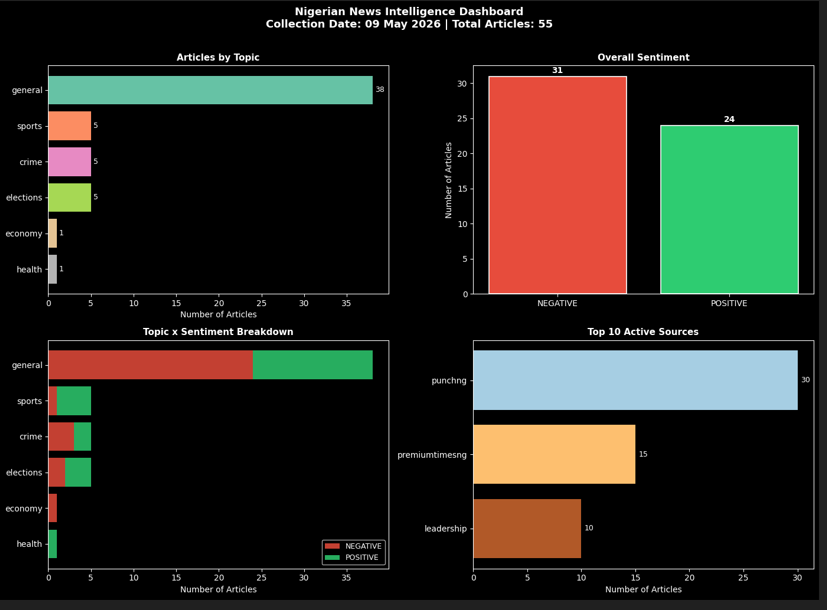
This week, 55 news stories were collected and analysed. That number alone should make you pause. In just seven days, between May 3 and May 9, 2026, Nigerian journalists, correspondents, and news platforms produced dozens of articles covering everything from criminal activity to elections, from Abuja boardrooms to Lagos streets, from the corridors of Aso Rock to the security outposts of Kwara State. That is not just news. That is a signal. And if you know how to read signals, you are already ahead of everyone else who is just reading headlines.

Read Also: Early Warning Signs: A Data-Driven Analysis of Emerging Security Patterns in the Southwest

This is exactly what a civic data intelligence platform exists to do. Not to tell you what happened, you already know what happened. But to show you what the pattern means, where the pressure is building, and what the numbers are quietly screaming that the headlines are too busy to notice. This week’s data is a fascinating mixture of noise, signal, and a few uncomfortable truths that deserve serious attention from every Nigerian who cares about governance, public accountability, and the direction of this country.

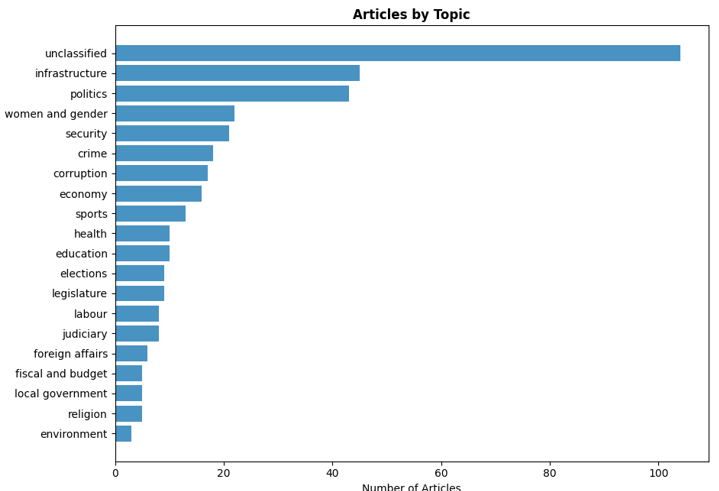
Let us start with the most striking number. Out of 55 articles collected and analysed this week, 38 of them, that is, nearly 70 percent were classified under the category of “general.” In data analytics, when nearly three-quarters of your dataset falls into an unclassified bucket, it does not mean the news was unimportant. It means the news was complex, multi-layered, and difficult to pin down to a single category. It means Nigerian public discourse this week was diffuse, scattered, and covering a wide terrain simultaneously. Politics bled into crime. Crime bled into elections. Elections bled into governance. The lines were blurry, and blurry lines in public discourse are almost always a symptom of a country in transition, under pressure, or heading toward a significant moment.

Politics emerged as the second most covered topic, followed by crime, sports, and elections. Security, as a distinct standalone category, barely registered. Yet crime and conflict stories dominated the week. In Nigerian governance analysis, that gap between “crime” and “security” tells a story all by itself. Crime is what happens on the ground. Security is the government’s institutional response to it. When crime articles outnumber security articles by a wide margin, it suggests that Nigerians are experiencing and reporting street-level disorder far faster than the state is producing a visible institutional response. That is not just a journalism observation. That is a governance warning sign.

Now let us talk about sentiment, because this is where the data gets genuinely interesting. Of the 55 articles analysed, 31 carried negative sentiment, and 24 carried positive sentiment. That translates to roughly 56 percent negative versus 44 percent positive. On the surface, that might seem like a country that is slightly more pessimistic than optimistic, which in itself is not unusual for any developing democracy navigating economic pressure and political uncertainty. But the detail that matters most is not the split; it is what is driving each side.

Read Also: The Cost of Ignoring Early Warnings: A Risk Projection for the Southwest Security

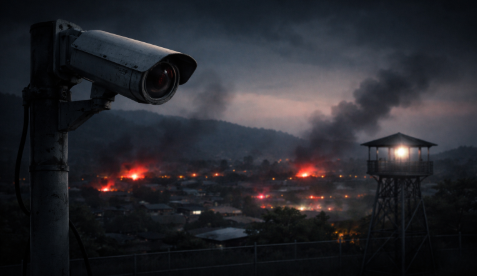
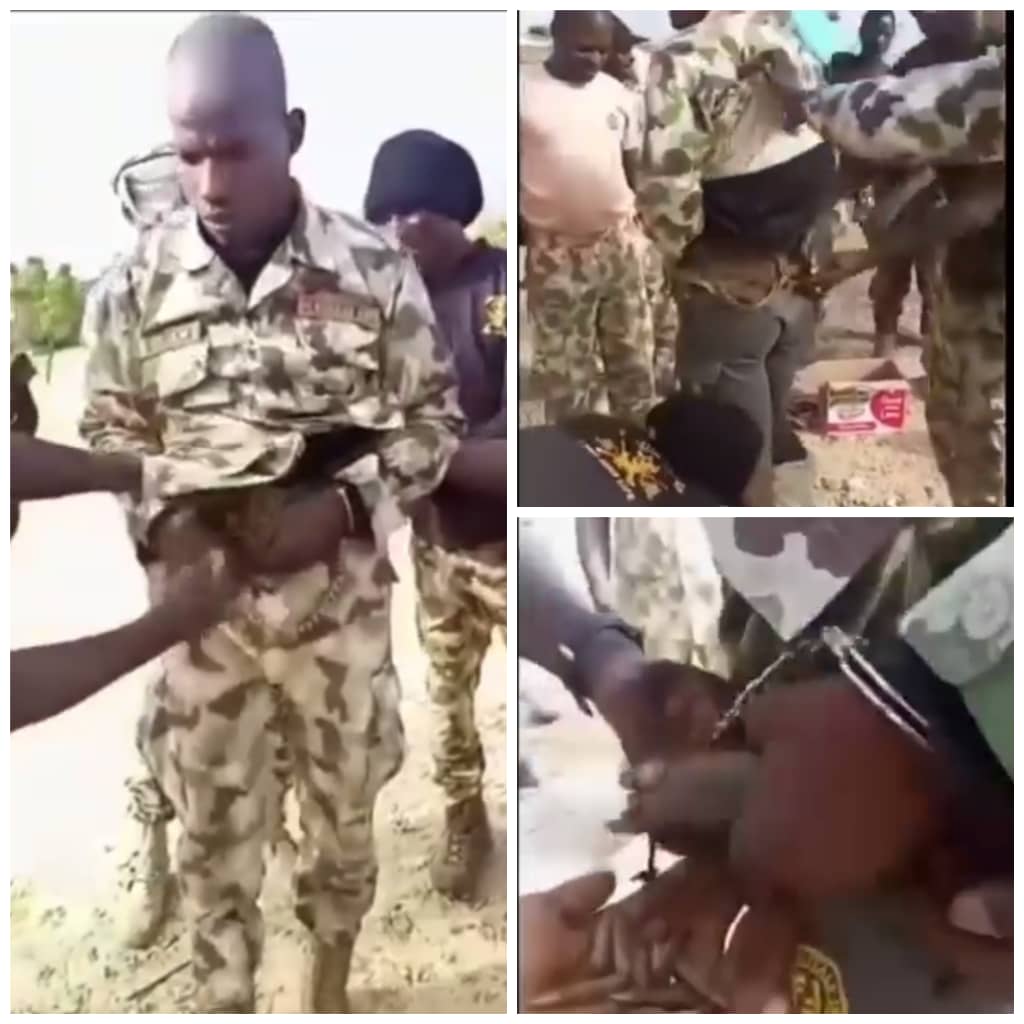
The negative sentiment this week was driven by stories involving attacks on military personnel, kidnappings in Kwara State, the Labour Party internal crisis, and the controversy surrounding JAMB and the hijab. The positive sentiment, on the other hand, was partially driven by a military success story, Nigerian troops repelling an attack on a military position. And this is where the data reveals something important that casual reading would completely miss.

Our system flagged what it calls a framing contradiction. Two articles used positive language to frame events that were, underneath the surface, deeply alarming. The soldiers repelled the attack, that is the positive frame. But the attack happened in the first place. Armed groups were capable of reaching a military position and engaging security forces directly. A successful defence does not make the threat disappear. When the media focuses only on the victory without examining the danger that produced the confrontation, the public develops a distorted picture of national security conditions. That distortion is dangerous, and it is exactly the kind of pattern that a data intelligence system is designed to surface before it becomes a crisis.

The risk distribution this week broke down as follows: 35 articles at LOW risk, 13 at MEDIUM, 6 at HIGH, and 1 at CRITICAL. What is significant here is not the single critical article, though it deserves urgent attention. What is significant is the 6 HIGH-risk stories sitting just below the critical threshold. In risk management, the zone just below critical is often more dangerous than the critical zone itself, because it is where problems are developing fast enough to matter but slowly enough to be ignored. Those 6 high-risk stories this week represent the pressure that is building beneath the surface of Nigerian public life. They are the stories that are not yet making the front page but will be if they are not addressed.

The critical-risk story involved attacks on military personnel and armed clashes with militant groups, a story that, as discussed above, was framed positively in much of the coverage despite its severity. Among the high-risk stories were the arrest of suspected kidnappers in Kwara State alongside the recovery of AK-47 rifles, the Labour Party internal crisis, and the JAMB hijab controversy. These are not isolated incidents. Together, they point to deeper institutional stress building beneath the surface of Nigerian public life in ways that the weekly headline cycle is not equipped to capture.

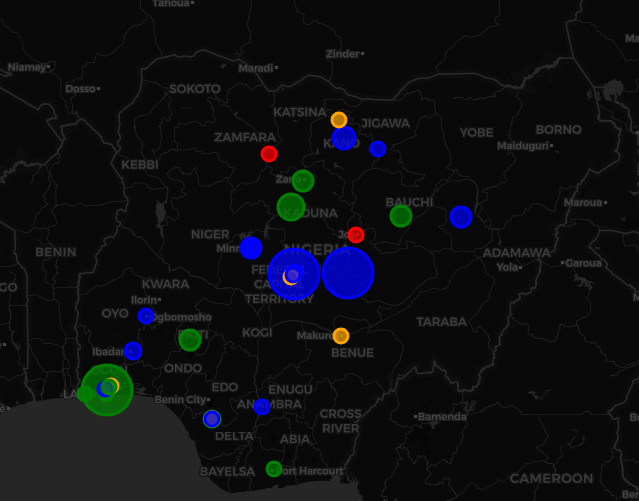
The geographic distribution of this week’s coverage is equally revealing. Nigeria as a whole received the highest number of mentions, followed by Lagos, Ghana, Kano, and Kenya. The appearance of Ghana and Kenya in this week’s Nigerian news data was connected primarily to positive international health developments, the World Health Organisation’s report on malaria vaccine progress in those countries.

But Nigeria’s absence from that positive health discussion says a great deal. Nigeria carries one of the world’s heaviest malaria burdens, yet it was not among the countries highlighted for major vaccine impact. During the same week, a separate health article warned Nigerians about hidden genotype risks beyond the commonly discussed AA and AS categories. Together, these two health stories expose a system still struggling with awareness, prevention, and long-term public education, and a media environment that covers health reactively rather than strategically.

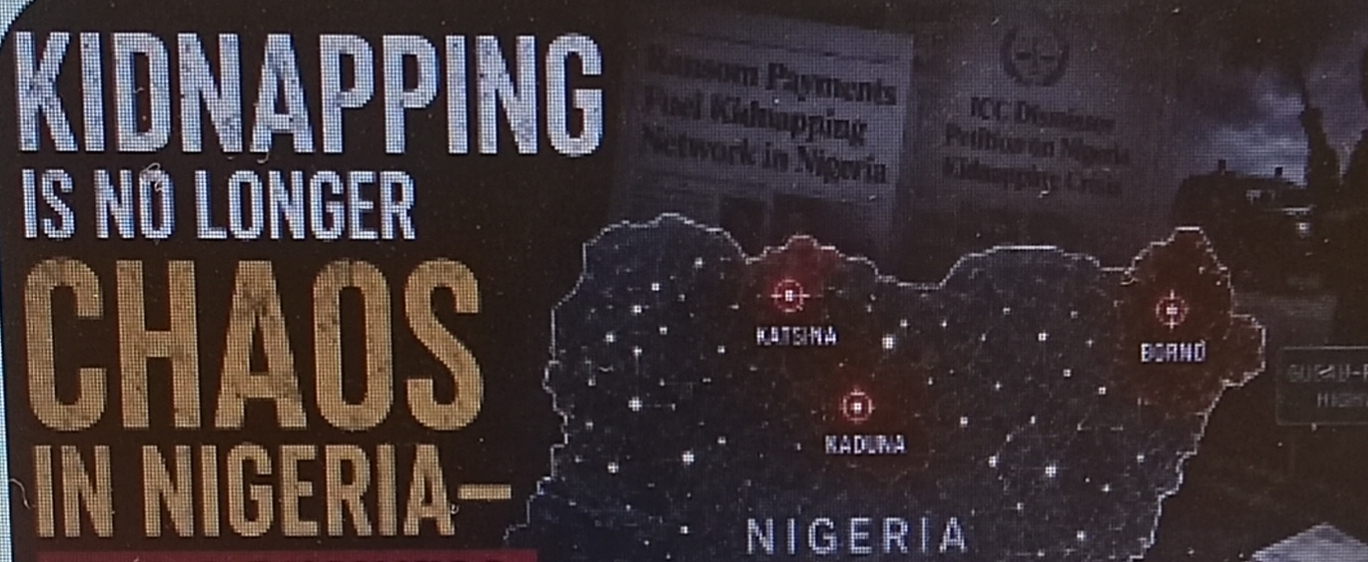
Now here is the geographic signal that demands the most attention this week. Kwara State recorded the highest risk index of any location in the entire dataset: 0.95 out of 1.0. That is not a rounding error. That is a near-critical score attached to a specific place on the Nigerian map. A score that high usually means that several danger indicators are appearing at the same time: security threats, negative public sentiment, institutional pressure, and unstable conditions all concentrated in one location. The kidnapping case with AK-47 recoveries was the most visible manifestation of that pressure. But one kidnapping case alone does not produce a risk index of 0.95. It reflects a broader environment in Kwara State that demands attention from both state and federal authorities before it crosses from HIGH to CRITICAL.

In data analytics, we call these leading indicators, signals that appear before the main event, often ignored in real time but clearly visible in hindsight. Kwara State this week is a leading indicator. The question is whether the right people are reading it.

One of the most quietly significant findings of this week’s analysis is not what appeared in the data; it is what was almost absent. Only one economic article appeared in the entire dataset this week. Just one. And yet our intelligence pipeline still assigned the economy a risk score of 0.75, a score that sits firmly in the High-risk zone.

Think carefully about what that combination means. The economy is carrying a High-risk score, but the media and the national conversation are not reflecting it proportionately and explaining why citizens should endure. When economic pressure fails to dominate the public conversation, policymakers risk underestimating public frustration until it is too late to manage it quietly.

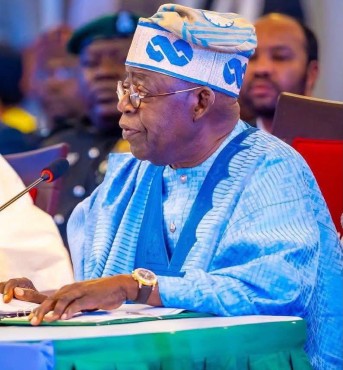
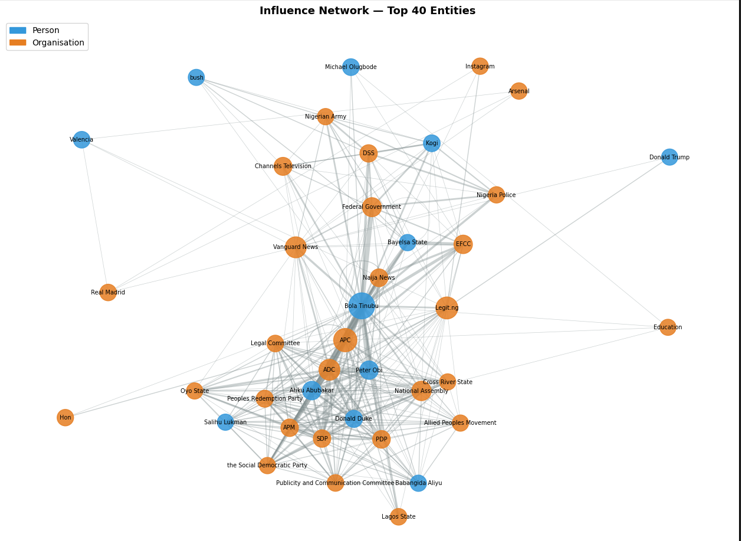
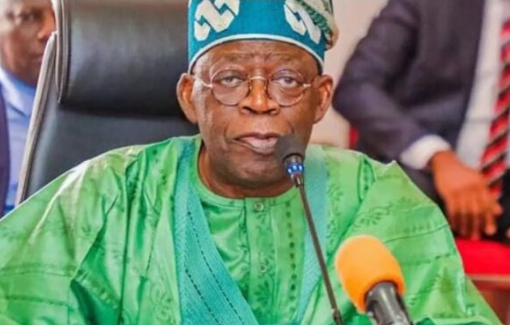
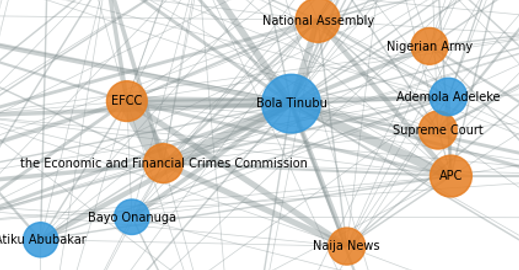
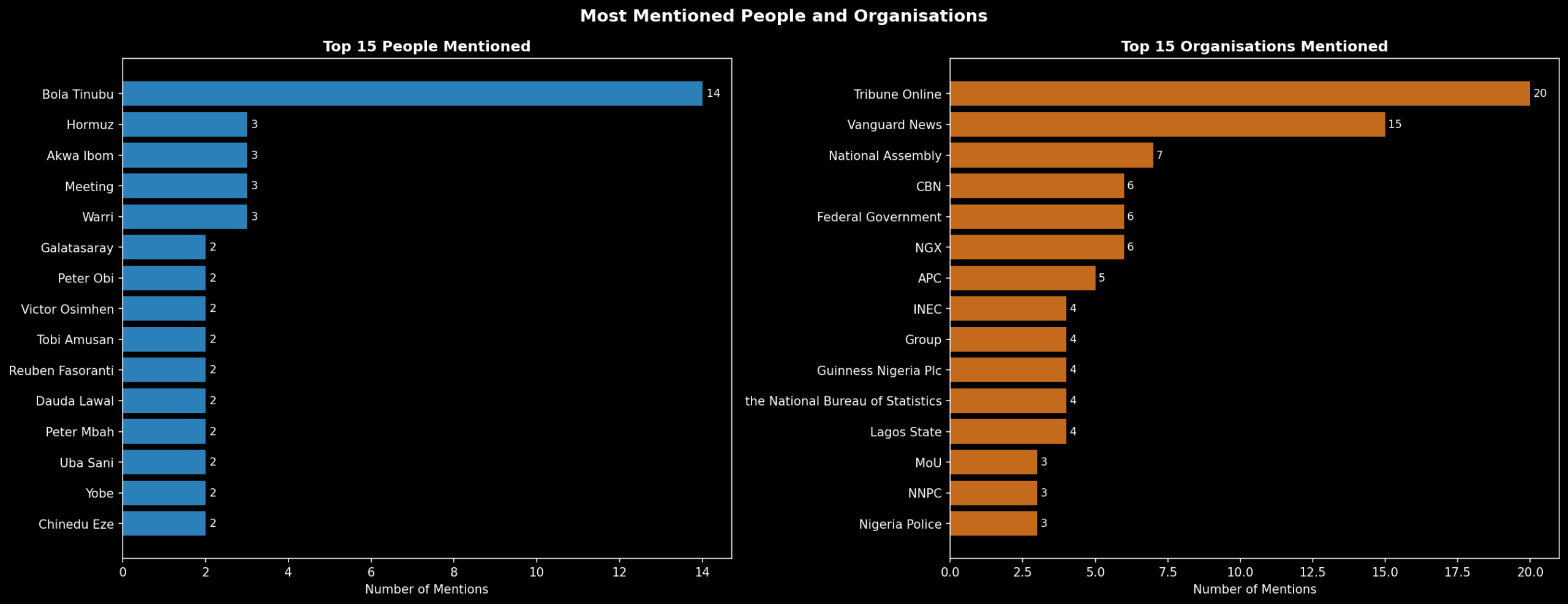
President Bola Ahmed Tinubu was the most mentioned political figure during the week, a reflection of his central position in Nigerian political gravity. But the more interesting name in this week’s dataset is Herbert Wigwe, whose name continues to appear in investigative discussions linked to corporate structures and financial accountability following his death in 2024. The continued attention surrounding Wigwe’s business network shows how unresolved elite financial questions often outlive the individuals involved. That persistence in the data is itself a signal; it means the institutional questions his case raised have not been answered, and the public has not forgotten.

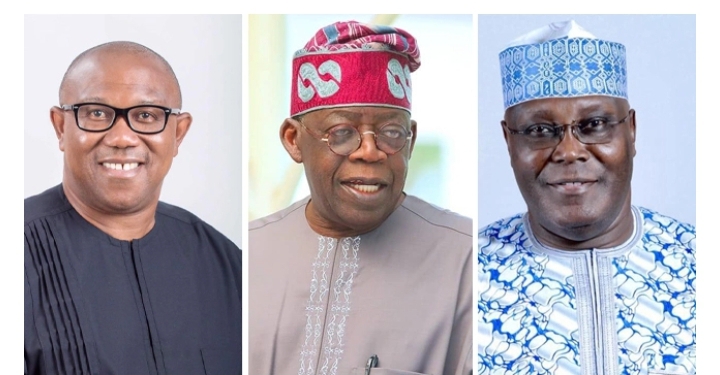
The Labour Party crisis also received significant attention this week. Public declarations that the crisis had been resolved and that the party was preparing for 2027 carried clear political messaging. Nigerian political parties frequently announce unity while underlying tensions remain unresolved. Our system does not take those announcements at face value; it tracks the pattern of how similar announcements have preceded continued instability in the past. The approach to the 2027 elections has already begun shaping public narratives, alliances, and positioning, and tracking those patterns early is essential. Political instability rarely appears suddenly. It builds gradually through signals, statements, and strategic communication, exactly the kind of pattern a data intelligence platform is designed to catch.

This week also carried a quieter but important development: a public call for Nigeria to ratify the Malabo Protocol, which focuses on accountability for international crimes and governance standards across Africa. The timing of this discussion, alongside rising insecurity and political tensions, reflects growing concerns about institutional accountability in Nigeria. Whether Nigeria’s institutions are strong enough to handle the challenges ahead is a question that data alone cannot answer, but it helps identify clearly where those concerns are growing and how loudly

Beyond the individual stories, our intelligence system computed three advanced signals this week that deserve serious attention. The first is the economy early warning already discussed — a risk score of 0.75 with below-average media coverage. The gap between perceived and actual economic risk is widening, and that gap has consequences.

The second is the Kwara State geo hotspot, a risk index of 0.95 that places Kwara at the top of this week’s geographic risk table. This is not a routine classification. It is a concentration of multiple risk indicators in a specific location, and it requires a targeted response rather than general national monitoring.

The third is the framing contradiction — two articles using positive language on events that carry serious underlying risk. The most striking example is the military repelling story. When victory narratives dominate coverage of ongoing security threats, public understanding of the severity of those threats is systematically distorted. A government that reads only the positive framing of its security operations may badly miscalibrate its response to the threats those operations are responding to. Accurate intelligence requires seeing past the frame to the underlying reality, and that is precisely what this platform is built to do.

What Does All of This Mean? It means Nigeria is at one of those moments where the data is sending clear signals that political actors, civil society leaders, journalists, and ordinary citizens need to pay close attention. Security threats are becoming more concentrated, particularly in Kwara State and around military positions in the north. Economic pressure is quietly rising beneath the surface of a media environment that is not yet reflecting it. Public health concerns, from malaria to genotype awareness, remain chronically underreported. Political positioning for 2027 has already begun shaping the national narrative. And important warning signs, from Kwara’s risk index to the economy’s silent pressure, are appearing clearly in the data while remaining largely invisible in the daily news cycle.

Nigeria’s problems are deeply connected. Security issues influence politics. Economic pressure affects public trust. Weak health systems reduce national resilience. Most people see these issues separately because that is how daily news presents them. Civic intelligence connects them and shows the wider pattern, the shape of the week that no single headline can capture.

None of this is cause for despair. In fact, the opposite is true. The fact that 55 articles were collected, analysed, mapped, and distilled into a coherent intelligence picture in a single week is itself a sign of a system working exactly as it should. Nigerians are talking. Nigerian journalists are writing. Nigerian civil society is watching. The question is whether the people in positions of power, in Abuja, in Kwara, in state government houses across the country, are reading the same signals that the data is producing. Whether they are using data intelligence to govern, or whether governance is still running on instinct, sentiment, and political calculation alone.

That is the gap that data-driven civic intelligence exists to close. Not by replacing journalism or political analysis, but by sitting alongside them and saying: here is what the pattern looks like when you step back far enough to see it whole. Here is what 55 stories look like when you stop reading them one by one and start reading them as a dataset. Here is what Nigeria looks like this week, not through the lens of one editor, one political affiliation, or one region, but through the lens of data.

If this kind of analysis matters to you, and if you have read this far, it clearly does, then the conversation does not end here. Head to the Data Lab page to explore the full dataset and methodology documents, where you can interrogate the numbers and draw your own conclusions from the data. Visit the Data Intelligence page for advanced dashboards, risk maps, and strategic analysis built for serious governance watchers. And if you want this level of insight delivered to you every week without having to seek it out, subscribe to the Data Intelligence page. Because in a country moving as fast as Nigeria, the people who are informed earliest are the people who are positioned best. The data is already talking. The only question is whether you are listening.

© EphraimHill DC 2026. Idowu Ephraim Faleye is a freelance political writer and the Founder of EphraimHill DC. Trained in Political Science and Public Administration, he is a Certified Data Professional and a registered member of the Computer Professionals Registration Council of Nigeria. He writes at the intersection of data, governance, and civic intelligence, transforming complex national issues into clear and accessible insights.

Contact: ephraimhill01@gmail.com | WhatsApp: +2348132100608
CONTINUE TO DATA LAB CONTINUE TO DATA INTELLIGENCE

Share

Recent Posts

EphraimHill DC

EphraimHill Civic Data Intelligence: The Story Beneath the Headlines

Today, it has evolved into the EphraimHill Civic Intelligence Platform, built to help Nigerians understand issues of public interest.
Read More

The Cost of Ignoring Early Warnings: A Risk Projection for the Southwest Security

Early warnings are meaningless when they are seen, acknowledged, and then ignored
Read More
EphraimHill DataBlog

Early Warning Signs: A Data-Driven Analysis of Emerging Security Patterns in the Southwest

Early warning signs in security data rarely announce themselves through a single dramatic incident; they emerge quietly through patterns. Repetition of similar attacks, their geographic concentration, timing, and the consistent choice of targets form measurable signals that point to deeper security trends.
Read More
EphraimHill DataBlog

The Real Enemy of Nigeria’s Growth: Look in the Mirror

The enemy of Nigeria’s growth is not some hidden curse, neither is it our climate nor geographical location. The truth is hard, bitter, and uncomfortable: the Nigerian people themselves are the greatest enemy of Nigeria's development
Read More
EphraimHill DataBlog

Aregbesola, Atiku, and the Judas Kiss: A Political Betrayal at the House of Oduduwa

After all, Nigerian politics has never been short of strange bedfellows. But on a closer look, this move is more than politics. It is a bitter cocktail of vengeance, a loud echo of inordinate ambition, and a dangerous dance of political betrayal in the house of Oduduwa.
Read More
EphraimHill DataBlog

Buhari’s Dangerous Gamble: How Amnesty for Boko-Haram Sabotaged and Endangered Nigeria’s Army

Now we hear of frequent ambushes. Nigerian soldiers are being captured, killed, and humiliated by ragtag Boko Haram fighters. Why? Because there are moles within the Army. Because those so-called repentant fighters never repented. They only changed uniforms.
Read More
EphraimHill DataBlog

Value Ingredients Limited: Catalyzing Ekiti-State Blueprint for Economic Rebirth

We lack the industrial infrastructure to add value to our growth. We need industries that process farm produce into finished goods, create jobs, reduce waste, and generate wealth. This is the blueprint for economic rebirth in Ekiti State.
Read More
EphraimHill DataBlog

A Wake-Up Call to the Newly Constituted South West Development Commission

he South West Development Commission is that long-awaited platform—and its timing could not be more critical, nor its responsibility more urgent
Read More
EphraimHill DataBlog

Ritual Money: The Growing Sacrifice of Girls for Ritual Wealth in Nigeria

Some people want to get rich quickly. There is a growing certainty that human life can be exchanged for wealth, called ritual money.
Read More
EphraimHill DataBlog

Saving Yorubaland from Fulani Invasion Before It’s Too Late

Yorubaland is facing an existential threat that demands nothing less than the total focus of the government and the collective mobilization of all our national resources, political will, and military might to save Yorubaland from Fulani invasion.
Read More
EphraimHill DataBlog

Our Land, Our Duty: No Savior is Coming — Yoruba Must Rise As One People

The bitter truth is that the survival of Yorubaland now depends not on empty prayers or hollow political promises, but on our ability to take our destiny into our own hands, rise as one people, and defend our land without allowing the poison of religion or politics to divide us
Read More
EphraimHill DataBlog

When Your Seat Becomes the Target of Your Competitors: Your Performance Doesn’t Inspire—It Infuriates

When the seat you are sitting on is the target of your competitors, there is nothing you can do to please those who are contending for the seat. It doesn’t matter how hard you try or how sincere your intentions are; they will always find a reason to complain.
Read More
EphraimHill DataBlog

A Hard Look at Our Last Economic Chance: If Tinubu Cannot, Then Who Possibly Can?

When people begin to question whether he can turn around Nigeria’s struggling economy, the more pressing question becomes—if Tinubu cannot, then who possibly can?
Read More
EphraimHill DataBlog

Why the Sultan Fears Social Media: The People’s Weapon Against Nigeria’s Power Establishment.

This bold statement sheds light on a growing tension in Nigeria’s power dynamics—why the Sultan fears social media. In truth, it’s because social media has become the people’s weapon against Nigeria’s entrenched power establishment
Read More
Where Do the Richest People in the World Come From? A Data-Driven Look at Global Billionaires

Where Do the World’s Richest People Come From? A Data-Driven Look at Global Billionaires

The global billionaire landscape is a dynamic and ever-evolving picture, reflecting the shifting sands of economic power, industry dominance, and societal change
Read More
Trump's Crackdown on Illicit Dollars Fortunes

Trump’s Crackdown on Illicit Dollars Fortunes: A Mystic Wind of Justice to Reclaim African Stolen Future

Donald Trump is a man whose name alone splits the world into love and hate: To some, he’s a devil in a red tie, to others, he’s a modern-day prophet wielding divine justice. But in this moment, as the U.S. Treasury launches a historic global crackdown on illicit dollar fortunes, even his fiercest critics must ask: Is this the wrath of God
Read More
EphraimHill dataBlog

Trump’s Tariff-Centric Approach Overlooks America’s Strength in the Service and Tech-Driven Economy

Trump’s tariff-centric approach is built on an outdated view of America’s economic reality. The United States is no longer defined by factories but by code, services, and ideas.
Read More
EphraimHill dataBlog

When Giants Clash: USA and China Tariff War Could Collapse the Global Order

While the U.S. and China are the main players, the consequences are being felt globally, especially in developing nations.
Read More
EphraimHill DataBlog

Forgotten and Forsaken Inside the Nigerian Prison System

Reflectively, the current state of Nigeria’s prison system reflects broader governmental and societal negligence.
Read More
EphraimHill DataBlog

There’s Silent War in The forests of Yorubaland:  Rise Before Our land Falls

The forests of Yorubaland have turned into the devil’s camp of Fulani herdsmen kidnappers.
Read More
EphraimHill DataBlog

Kidnapping in Nigeria: A National Emergency That Demands Immediate Action

Kidnapping has become a national emergency in Nigeria. It is no longer confined to the wealthy, the politically connected, or the privileged few.
Read More
Nigeria's Rotational Presidency and The Looming Threat of Another Fulani-led Government

Nigeria’s Rotational Presidency and The Looming Threat of Another Fulani-led Government

As another presidential election cycle approaches, one critical question looms: Can Nigeria afford another Fulani-led government?
Read More
Locked Out After Lockup: The Untold Struggles of Ex-Convicts in Africa

Locked Out After Lockup: The Untold Struggles of Ex-Convicts in Africa

For ex-convicts, freedom often feels like a cruel joke. They leave prison only to face rejection from their families, ostracism from their communities, and outright discrimination from potential employers.
Read More
Buhari’s Untouchable Past: The Lingering Legacy of Resources Mismanagement in Nigeria

Buhari’s Untouchable Past: The Lingering Legacy of Resources Mismanagement in Nigeria

This piece delves into Buhari's legacy of mismanagement of national resources, explores how Nigerians have been affected, and questions the silence of current leaders and all the country’s elites
Read More
The Hard Way is the Only Way for Sustainable Economic Recovery in Nigeria

The Hard Way is the Only Way for Sustainable Economic Recovery in Nigeria

But the truth is that genuine, sustainable economic recovery won’t be found in temporary relief programs. It requires a difficult and disciplined focus on productivity and self-reliance.
Read More
LET ME TELL YOU WHY ‘JAPA’ MAY NOT BE YOUR BEST OPTION

LET ME TELL YOU WHY ‘JAPA’ MAY NOT BE YOUR BEST OPTION

This article isn't meant to discourage anyone from exploring opportunities outside Nigeria. Instead, it's a call for reflection, urging us to examine the reality of life abroad, weigh the costs and benefits, and understand Nigeria's potential. Here, we’ll explore the often-overlooked aspects of the “Japa” dream and consider why, perhaps, the answer to a better life may not be outside Nigeria's borders
Read More
Ekiti-State Democratically Elected Governors, and Their Diverse Legacies

Ekiti-State Democratically Elected Governors, and Their Diverse Legacies

All democratically elected Ekiti State’s governors have left distinctive marks on the state, each shaped by their background, personality, and unique approach to governance. From Adebayo’s calm stewardship and Fayose’s populist flair to Fayemi’s visionary projects and Oni’s fiscal prudence, Ekiti’s leadership history reveals a fascinating blend of styles and legacies.
Read More
Governor Fayemi's Abandoned Projects and the Cost of Ambition

Governor Fayemi’s Abandoned Projects and the Cost of Ambition

In the end, Fayemi’s legacy is a dual narrative: one of grand vision and intent, and another of pragmatic results. His ambition, while grounded in a sincere desire to uplift Ekiti, led to decisions that diverted focus away from projects essential to the state’s immediate progress. The balance between these two sides of Fayemi’s legacy leaves a lasting question for the people of Ekiti—and indeed, for leaders everywhere: Can ambition truly be justified if it comes at the cost of one’s primary duty to those who first entrusted them with power?
Read More
The Impact of Multiple Tax Burdens on Production Costs and Commodity Prices in Nigeria

The Impact of Multiple Tax Burdens on Production Costs and Commodity Prices in Nigeria

This overlapping multiple tax burdens down production, drives up the prices of everyday commodities, and erodes purchasing power for ordinary Nigerians. For citizens simply trying to survive, the rising cost of food, housing, and other essentials adds a daily burden they can barely shoulder. Every new tax pushes the cost of basic necessities further out of reach, and every price increase hits the pockets of every family.
Read More
Clamour For Military Intervention: A Retrograde Amnesia of Nigeria’s Painful History with Dictatorship

Clamour For Military Intervention: A Retrograde Amnesia of Nigeria’s Painful History with Dictatorship

Freedom of speech—one of our most cherished rights today—was not handed to us freely. It was fought for, bled for, and won through the sacrifices of many. But today, there’s an unsettling clamour among some calling for the military to come back and clamp down on our media. They’re using the same freedom to call for silencing that very freedom, risking returning to the dark days when voices were muted, and antagonism was a crime.
Read More
Poor Service Delivery in Nigeria: Who Is to Be Blamed for Approving Substandard Projects?

Poor Service Delivery in Nigeria: Who Is to Be Blamed for Approving Substandard Projects?

This isn’t just about one school; it’s a mirror reflecting a larger, disturbing pattern across the nation. In Ekiti State, projects funded by public money crumble within a few years, often a direct consequence of poor oversight and mismanagement. While politicians make promises, it's Nigeria's civil servants who implement them—or sabotage them.
Read More
Higher Education in Nigeria: Trends and Their Consequences For the Country’s Future Leadership

Trends in Nigeria’s Tertiary Institutions and Consequences For the Country’s Future Leadership

This shift threatens the moral fabric of the nation and has dangerous implications for the future of leadership in the country. We are witnessing a generation of young people drifting further away from the path of integrity, lured by the mirage of quick wealth
Read More
Be Wary of World Bank’s Advice: A Cautionary Counsel for Nigeria Government

Be Wary of World Bank’s Advice: A Cautionary Counsel for Nigeria Government

The World Bank, a global financial institution with significant influence on policy decisions in developing nations, recommended a reduction in government support for social services.
Read More
Outdated Laws, Modern Realities: The Urgent Need to Modernize Nigeria's Legal Framework

Outdated Laws, Modern Realities: The Urgent Need to Modernize Nigeria’s Legal Framework

Nigeria's legal framework remains tied to the past—locked in a time warp of outdated laws, irrelevant statutes, and obsolete penalties. This disconnect between law and reality has far-reaching consequences
Read More
EphraimHill DataBlog

Building Strong Economic Foundations for Sound Economic Development: The Path to Nigeria’s Sustainable Growth

Strong foundations in governance and economic policies are crucial to achieving sustainable growth
Read More
Early Retirement Could Extend Retirees’ Life Expectancy, Reduce Overhead Costs, and Solve Youth Unemployment Crisis in Nigeria

Early Retirement Could Extend Retirees’ Life Expectancy, Reduce Overhead Costs, and Solve Youth Unemployment Crisis in Nigeria

The country faces a persistent challenge threatening its future prosperity—youth unemployment. The reality is stark: millions of young Nigerians graduate from tertiary institutions yearly with no jobs awaiting them.
Read More
The Quest for A Return to Regionalism in Nigeria: Will the North Let Go of Its Political Stronghold?

The Quest for A Return to Regionalism in Nigeria: Will the North Let Go of Its Political Stronghold?

Nigeria, with its complex history of governance, is once again facing calls for a return to regionalism. From its inception as a colony, through its early years as an independent state, Nigeria has oscillated between centralised and regional forms of governance
Read More
The Alarming Rise of Fulani Militias in the South and the Inaction of Southern Leaders

The Alarming Rise of Fulani Militias in the South and the Inaction of Southern Leaders

The Fulani militia is said to be driven by an age-old vision of their forefathers, most notably Uthman Dan Fodio, to expand and acquire new territories, particularly in the South. This vision has manifested in violent attempts to take control of land and resources, leaving behind a trail of death, destruction, and sorrow
Read More
How Digital Solutions Can Revolutionize Governance in Nigeria for Efficiency, Transparency, and Digital Economy.

How Digital Solutions Can Revolutionize Governance in Nigeria for Efficiency, Transparency, and Digital Economy.

Similarly, digital solutions, particularly the internet and computers, are becoming the electricity of the 21st century. Just as life without electricity is now unimaginable, so too will a life without digital tools seem improbable shortly.
Read More

Cracking Down on WASCE Examination Malpractice: The Role of AI in Restoring Examination Integrity

The West African Senior School Certificate Examination (WASCE) serves as a critical benchmark for students seeking admission into tertiary institutions. Alongside the Joint Admissions and Matriculation Board (JAMB), WASCE remains a key criterion for determining academic progression.
Read More
The Tragic Greed of Nigerian Leaders: When Public Office Becomes a Gateway to Personal Fortune

The Tragic Greed of Nigerian Leaders: When Public Office Becomes a Gateway to Personal Fortune

The destructive effects of corruption and the unbridled pursuit of personal fortune by Nigerian leaders who should be focused on serving the masses
Read More

The Northern Political Agenda and the Antics of El-Rufai’s Political Game

As Nigeria inches closer to the 2027 presidential election, one figure looms large in the shadows—Nasir El-Rufai. A key ally in Tinubu's ascent to power, El-Rufai has now become a pivotal player in a political game that threatens to reshape Nigeria’s future
Read More

Presidential U-Turn: Government of National Competence Turn to Government of National Cronyism

Why does the promise of 'Government of National Competence' made by Ashiwaju Tinubu turn out to be an illusion?
Read More
The Trend of Insecurity in Nigeria. [Part 2]

The Trend of Insecurity in Nigeria. [Part 2]

It’s important to delve deeper into the Trend of Insecurity in Nigeria and the inability of the Nigerian government to take decisive action.
Read More

The Trend of Insecurity in Nigeria. [Part 1]

Insecurity in Nigeria has followed a disturbing upward trend in recent years, with major criminal activities like terrorism, banditry, kidnapping, and ethnic violence surging.
Read More
The Undefined System of Government in Nigeria: A Call for True Federalism

The Undefined System of Government in Nigeria: A Call for True Federalism

Nigeria must embrace a system of government that allows for greater regional autonomy, where states are encouraged to develop their own resources and contribute to the national economy
Read More

The Injustice of a Northern Presidency in 2027

The North has had its turn, and it’s only right that the South should lead next. Ignoring this arrangement could deepen the divisions between the North and South
Read More
The majority of Nigerians are ostracized from the country's commonwealth

African Poverty is Not an Act of God

From the transatlantic slave trade to colonialism and modern economic sabotage, Africa has been systematically robbed, its wealth funnelling into the coffers of the Western world while its own people are left in chains of poverty.
Read More

Until We Separate Our Agriculture from Its Dependency on The Rainy Season, We Have Not Started Agriculture.

The future of agriculture in our region depends on the willingness of policymakers, farmers, and stakeholders to embrace innovation. It is time to reimagine our agricultural practices, invest in sustainable infrastructure, and ensure that our farms can thrive regardless of the season.
Read More

The Hidden Margins Between Politics and Governance in Nigeria

The Hidden Margins Between Politics and Governance in Nigeria In the public discourse surrounding leadership, two terms are often interchanged as though they are the same—politics and governance.
Read More

Nigeria’s Wicked Generations: From Slave Traders to Corrupt Youths

These different generations of wickedness have systematically undermined the country's potential, stifling progress and prosperity. From the era of the slave traders to the modern-day quick-money culture, each generation has left a profound mark on Nigeria's development.
Read More

The Detrimental Impact of Quick-Fix Policies on Nigeria’s Development

Quick-fix policies refer to hurriedly developed decisions that are implemented by government officials, often without sufficient input from stakeholders or consideration of the broader implications.
Read More

How Nigeria’s Stolen Wealth is Shaping Its Future

Nigeria's stolen wealth, intended to uplift the nation, are used to run the economy of foreign Nations, a stark reminder of the betrayal and loss suffered by the people.
Read More
Minimum Wage Increase vs Inflation: Harmonizing Nigeria's Economy

Minimum Wage Increase vs Inflation: Harmonizing Nigeria’s Economy

The recent struggle for increase in minimum wage and the rising inflation in Nigeria is a serious economy challenge. Working hard every day but still not being able to afford basic necessities because prices keep going up is heartbreaking and unfair.
Read More

Subsidy Removal Palliative Distribution: Challenges and Solutions.

Nigeria can weave together the threads of data provided by different government agencies and use it to structure subsidy removal palliative distribution programs.
Read More

The Devastating Impact of Rampant Corruption in Nigerian Society

The Central Bank of Nigeria (CBN) has been exposed as another breeding ground for deep-rooted corruption, and this is a sad reminder of the endless struggle against corruption in Nigerian society.
Read More
Nigeria Laws and Penalties in Need of Reform

Nigeria Legal System and Penalties Are Urgently in Need of Reform

This blogpost will delve into the depths of Nigeria legal system, and propose the urgent imperative for reform in Nigeria legal system.
Read More

Exploring the dichotomy between Character and Reputation

In the complex tapestry of human interactions, a distinct yet often misunderstood...
Read More

Mixing Different Categories of Offenders Behind Bars:  The Urgent Case for Prison Reform.

In a society yearning for justice and the opportunity to rehabilitate and reintegrate the Ex-convicts back into society, the need for prison reform has never been more pressing
Read More

The Incursion of Political Merchants in Nigeria Politics

Politics in Nigeria has transformed into an enterprise rather than a platform...
Read More

Direct Taxes Deduction from Every Bank Transaction Can Boost Tax Revenue

In today's rapidly evolving world, governments are confronted by the challenge of...
Read More

Transform Nigerian Local Councils into Agric Development Centres to Enhance Productivity

Since the end of regional governments, Nigeria recurring agricultural policies have consistently...
Read More

The HND-BSc Dichotomy Debate: Unveiling the Consequences.

The dichotomy between the Higher National Diploma (HND) awarded by polytechnics and...
Read More

 The Potential of Dangote Refinery On Nigeria’s Economic Growth

The Petroleum Refinery and Petrochemical Project established by Aliko Dangote have the...
Read More

The Future of Nigeria Without Petroleum Subsidy

Nigeria is rich in natural resources, particularly oil, which accounted for a...
Read More

2023 Population Census: A Necessity for Addressing Nigeria’s Problems

The 2023 Nigeria’s population census exercise is approaching. This crucial exercise holds...
Read More

Constitutional Democracy and the Unconstitutionality of Interim Government

The protest by undemocratic forces within the country over the recently concluded...
Read More
The Absurdity of Branding Lagos City A No-Man's-Land

The Absurdity Of Branding Lagos City A No-man’s-land

The absurdity of branding Lagos City “a no-man's-land” has been demonstrated by...
Read More
Visual Presentation of the 2023 Presidential Election Result in Nigeria

DATA VISUALIZATION OF THE 2023 PRESIDENTIAL ELECTION IN NIGERIA

Data Visualization of The 2023 Presidential Election Result Analysis The Data used...
Read More
Praying For A Better Nigeria - Turn Your Prayer Into Action!

Praying For A Better Nigeria – Turn Your Prayer Into Action!

Do you feel frustrated with the current state of Nigeria? Do you...
Read More
Past Nigeria Leaders

THE ONLY WAY TO ENSURE A NEW NIGERIA

For too long, Governance has become increasingly inefficient in Nigeria, resulting in...
Read More

APC Govs beg President Buhari to respect S’Court

Ahead of Saturday’s presidential poll, the ruling All Progressives Congress (APC) has...
Read More
Politics of Redesigning Nigeria currency

POLITICS OF REDESIGNING NIGERIA CURRENCY

The recent launch of a new design of Nigeria's currency has been...
Read More

Leave a Reply

Your email address will not be published. Required fields are marked *

EphraimHill Data Blog is a leading online platform dedicated to providing insightful analysis, data-driven reports, and informed perspectives on the intersection of Politics & Society. With a focus on Sub-Saharan Africa, our blog caters to a diverse audience including politicians, political office holders, lawmakers, political appointees, political scholars, civil society organizations, and everyday people who think critically about politics.

Recent Post

Contact Us