
By EphraimHill DC | Civic Data Intelligence | Week 21, 2025
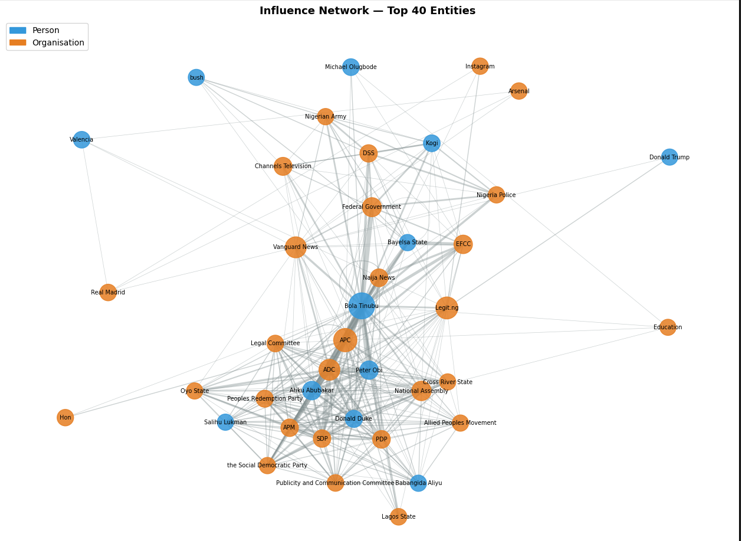
Nigeria has entered a political season that does not yet look like an election season in the traditional sense. There are no full campaign convoys on major highways, no overwhelming flood of manifestos on the streets, and no loud public mobilisation dominating everyday civic space. However, beneath this surface calm, something far more consequential is already taking shape. It is the slow construction of the architecture of power, where alliances are formed, influence is negotiated, and future outcomes are quietly structured long before citizens are formally asked to vote.
This phase of politics is often invisible to the average observer, yet it is the most decisive stage of any electoral cycle. It is the stage where the foundations of power are laid, where the rules of engagement are subtly defined, and where the boundaries of political possibility are determined. This week, that invisible process became partially visible through a series of political signals that, when combined, reveal a deeper structural movement within Nigeria’s democracy.
President Bola Tinubu has secured the APC presidential ticket for 2027, while other political parties have signalled their emerging alignments and anticipated candidates. Predictably, the political class reacted with strategic enthusiasm, defensive positioning, and renewed coalition signalling. However, beyond elite political circles, the broader public reaction remained relatively muted. This is not surprising. For many Nigerians, immediate concerns such as rising living costs, insecurity in certain regions, school disruptions, and persistent economic pressure remain more urgent than electoral positioning two years ahead.
Nevertheless, while the public attention is elsewhere, the political system is already operating in advance. What appears distant in time is already active in structure. And, importantly, what looks like early political speculation is, in fact, the early formation of the architecture of power.
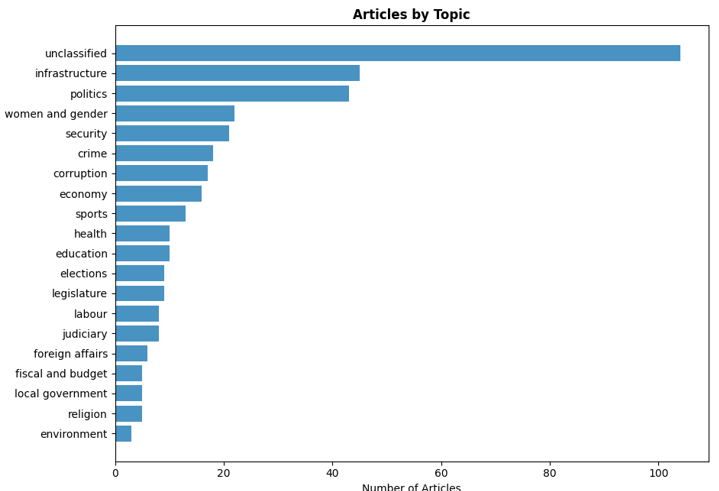
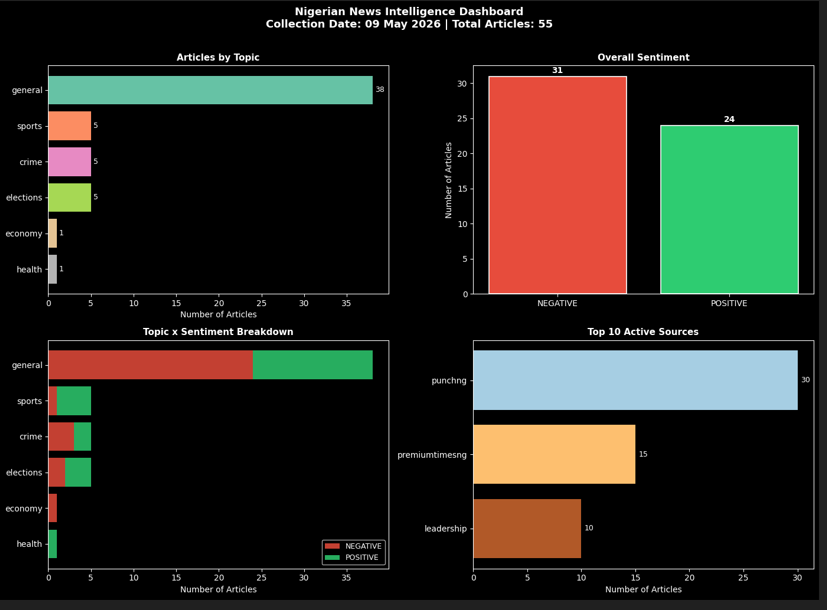
To understand this clearly, it is necessary to move beyond headlines and into pattern recognition. This week’s intelligence pipeline tracked 941 media articles across Nigeria’s information ecosystem. Of this total, only 53 articles were directly categorised as electoral content, while 18 focused explicitly on politics in a narrow sense. Combined, this represents less than 8 percent of total media output. Yet despite their relatively small numerical footprint, these political narratives carry disproportionate influence because they shape the institutional and governance trajectory that will determine the outcomes of far more consequential issues such as security, economic stability, and national cohesion.
Read Also: The Campaign Season Is Returning Early: Even as Governance Pressures Intensify
In other words, while political content appears numerically marginal, its structural impact is dominant. This is the central paradox of political intelligence: the smallest category of attention often produces the largest category of consequences.
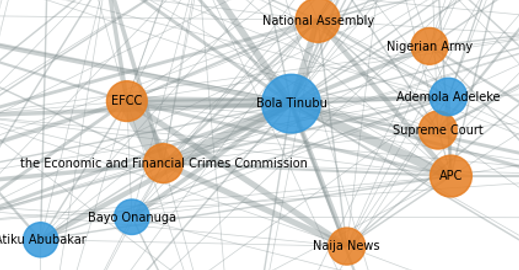
Consequently, the key question is not what is being said publicly, but what is being constructed privately within the political system. And to answer that question, one must examine the architecture of coalition-building in Nigeria.
Coalition politics in Nigeria rarely operate based on ideology or policy alignment. Instead, it is driven by a combination of resource negotiation, elite survival strategies, geographic balancing, and institutional access. Political actors do not simply come together to share ideas; they come together to distribute influence and secure positions within the post-election order. Therefore, coalitions function less as ideological partnerships and more as pre-election governance allocation systems.
As a result, the most important decisions in Nigerian elections are often not made on election day. Instead, they are made during coalition formation processes, where party structures are negotiated, candidate emergence is influenced, and future governance expectations are quietly distributed among competing interests.
From this perspective, when analysts refer to “forces shaping the 2027 election,” they are not describing abstract political energy. They are describing tangible leverage structures embedded within party systems, institutional networks, and elite alliances. Whoever controls these structures effectively determines who emerges as a candidate. Whoever determines candidates effectively shapes governance outcomes long before ballots are cast.
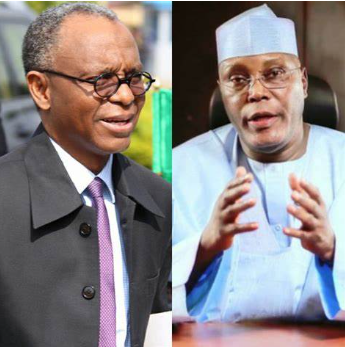
This is why the entry of figures such as former Governor Duke into the presidential conversation must be understood through a strategic lens rather than a purely electoral one. At this stage in the political cycle, such moves are not necessarily about immediate victory. Instead, they often serve as positioning mechanisms designed to establish bargaining power, expand political relevance, and secure a place within future coalition negotiations. In Nigerian political logic, visibility is not just communication; it is leverage.
Read Also: Nigeria’s Civic Data Intelligence: The Story Beneath the Headlines
However, while coalition-building is structurally sophisticated, its relationship with governance outcomes is far more complex. Historical patterns suggest that coalition efficiency in Nigeria does not automatically translate into governance efficiency. Political systems that are highly effective at assembling electoral coalitions often struggle to maintain coherence during governance execution. This is because coalition success is based on inclusion, while governance success requires prioritisation, discipline, and institutional coherence.
This tension is not new. Since Nigeria’s return to democratic rule in 1999, coalition formation has consistently prioritised zoning arrangements, regional balancing, defections, party mergers, and elite negotiations over detailed policy articulation. This does not indicate a failure of political intelligence; rather, it reflects the structural incentives of a system in which control of federal power grants access to extensive resources and institutional authority.
Therefore, political competition becomes less about ideological direction and more about access to governing machinery. In such an environment, coalition-building naturally becomes the central organising logic of political behaviour.
The 2015 election cycle offers a clear example of this dynamic. The formation of the APC coalition represented a historic consolidation of opposition forces, driven primarily by shared opposition to incumbency, strategic regional calculations, and elite alignment across party lines. It was a highly effective electoral strategy. However, once in power, the coalition faced the structural challenge of governing a diverse set of competing internal interests. This created ongoing pressure to balance political expectations against administrative efficiency.
Similarly, the 2023 cycle introduced a different but equally important signal. The emergence of a strong civic-driven political movement, particularly among younger voters, reflected growing dissatisfaction with elite-dominated coalition politics. Although this movement did not achieve electoral victory, it reshaped political expectations by introducing a stronger demand for accountability, transparency, and governance-centred discourse.
Taken together, these cycles reveal a consistent pattern: Nigerian politics is highly adaptive in winning elections but significantly less adaptive in converting electoral success into governance transformation.
The 2027 cycle appears, at least in its early stages, to be reproducing this same structural logic. Coalition conversations are primarily centred on traditional political variables such as geographic balancing, elite negotiation, and resource alignment. What remains less visible, at least in public discourse, is the extent to which these coalitions are being constructed around explicit governance frameworks or measurable policy commitments. That absence is analytically significant because it suggests continuity rather than transformation.
This interpretation is reinforced by pipeline intelligence data. Across 941 tracked media articles, sentiment analysis reveals a slightly negative overall tone, with 444 positive signals and 497 negative signals. However, the more important insight lies not in the numerical balance, but in the source of sentiment.
Positive sentiment is primarily concentrated within political elite narratives, particularly around coalition formation, candidate positioning, and party consolidation. In contrast, negative sentiment is more closely tied to lived experiences, including economic pressure, security concerns, and institutional stress. This divergence between elite optimism and public pressure creates a structural tension within the political system.
For example, security-related narratives in states such as Oyo, Borno, and Kaduna continue to dominate risk-oriented reporting. These are not isolated events but recurring indicators of systemic insecurity. Meanwhile, economic narratives increasingly reflect cost-of-living pressures, particularly around inflation, currency instability, and consumption stress. These economic signals are not confined to economic reporting alone; they are embedded across political and social narratives, indicating that economic anxiety has become a cross-cutting interpretive frame in public discourse.
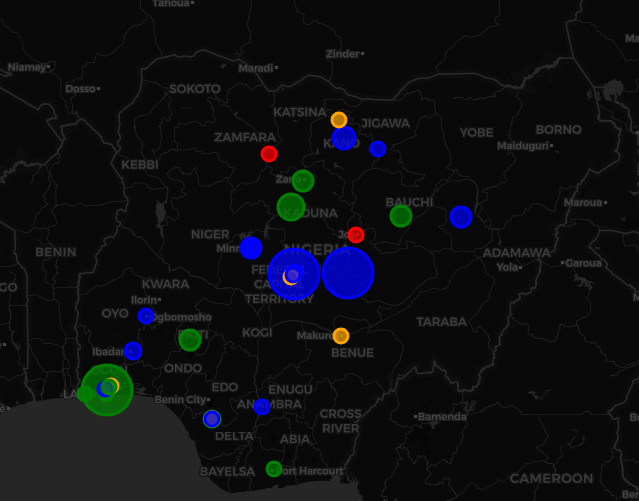
Furthermore, geographic concentration in media coverage reinforces existing structural asymmetries. Abuja and Lagos continue to dominate national reporting due to their political and economic centrality. Meanwhile, northern states such as Borno and Kaduna remain persistently associated with security narratives. This pattern suggests that national attention is unevenly distributed, which may have implications for policy responsiveness and resource allocation.
At the same time, risk classification data indicate that a significant proportion of weekly coverage falls within medium, high, and critical risk categories. This suggests that underlying instability remains persistent rather than episodic. In such an environment, political coalition-building occurs in parallel to ongoing systemic stress, rather than in a stabilised context.
This creates a critical divergence. On one side, political actors are actively constructing the architecture of power for 2027. On the other side, citizens are experiencing governance outcomes shaped by unresolved structural challenges. The gap between these two realities is not merely perceptual; it is functional. It determines the legitimacy and sustainability of future governance arrangements.
Historically, similar gaps have produced predictable outcomes. In 1999, coalition-building focused on national stability but embedded long-term patronage structures. In 2007, succession politics prioritised zoning logic but generated governance constraints. In 2015, coalition efficiency produced electoral success but required continuous internal balancing during governance. Across all these cycles, a consistent pattern emerges: coalition success does not guarantee governance success.
This raises an important forward-looking question: Will the 2027 cycle break this pattern or reinforce it?
Current evidence suggests continuity rather than rupture. However, political systems are dynamic, and early signals can evolve rapidly as coalition negotiations intensify. Over the next 6 to 12 months, coalition structures will likely become more defined, alliances more formalised, and political positioning more aggressive. During this period, the architecture of power for the 2027 election will be substantially finalised.
At the same time, external conditions such as security performance, economic stability, and institutional credibility will play an increasingly important role in shaping political sentiment. If these conditions deteriorate, they may override coalition logic and reshape electoral dynamics in unpredictable ways. Conversely, if they stabilise, they may reinforce existing political configurations.
Education and health, despite their critical importance to long-term development, remain underrepresented in media coverage. This underrepresentation reflects a broader structural issue: issues that receive less sustained attention often receive less sustained policy focus. Over time, this can create governance blind spots in sectors that are essential to human capital development and long-term national resilience.
Ultimately, Nigeria is entering a phase where the architecture of power is being constructed in real time, while governance conditions continue to evolve independently. The interaction between these two processes will determine the stability and effectiveness of the post-2027 political order.
The central insight of this analysis is therefore straightforward but significant: elections do not determine governance outcomes in isolation. Instead, governance outcomes are largely shaped by the coalition architectures built long before elections take place.
The 2027 political cycle is already underway, not in the form of campaigns but in the form of structural alignment. And what is being built now will determine not only who gains power, but how that power functions once it is acquired. This is why the architecture of power matters more than the campaign itself. Because by the time campaigns begin, most of the real decisions will already have been made.
This article represents the public-facing layer of EphraimHill DC’s civic intelligence system. However, beneath this narrative lies a deeper analytical infrastructure designed to track, measure, and interpret Nigeria’s evolving political and governance landscape in real time.
The Data Intelligence Hub provides continuous access to interactive dashboards that map governance risk indicators, sentiment trajectories, narrative shifts, geographic instability patterns, and early warning signals across Nigeria’s political ecosystem. It is designed for readers who require not just an interpretation of events, but a structured understanding of how those events connect across time, geography, and institutional systems.
Alongside this, the Data Lab provides direct access to the underlying intelligence infrastructure. It is designed for analysts, researchers, journalists, civic professionals, and policy observers who require transparency into methodology and access to structured datasets. The Data Lab includes weekly pipeline datasets, classification frameworks, methodological documentation, and reproducible analytical tools that allow independent verification and deeper investigation of national trends.
Together, these two layers form a complete civic intelligence system. One translates complexity into insight. The other provides the raw architecture for independent analysis. The purpose of this system is not simply to report events. It is to reveal the structure. Because in political systems like Nigeria’s, the most important truths are not always visible in the headlines. They are embedded in the patterns beneath them.
Stay informed. Go deeper. Visit ephraimhilldc.com to explore the full intelligence ecosystem.
EphraimHill DC is Nigeria’s civic data intelligence platform. We track, analyse, and interpret national developments to help Nigerians understand the deeper patterns behind public events. Our analysis is institutional, evidence-based, and politically neutral.
Week 21 | May 2025 | Intelligence Pipeline Output










































![The Trend of Insecurity in Nigeria. [Part 2]](https://ephraimhilldc.com/wp-content/uploads/2024/09/Computer-Monitoring-of-Remote-areas.png)