EphraimHill DC | Nigeria Weekly Civic Data Intelligence | November 15–21, 2026
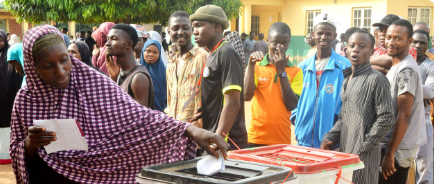
If you think Nigeria’s 2027 election campaign is still far away, this week’s data says you are wrong. Our system read 2,223 news articles from 15 to 21 November 2026, and one story rose above all the others. It was the story of campaigns, elections, and the growing heat between political camps. One headline even counted down “60 days to polls” and warned of fear over the electoral process. That is the kind of headline that makes a country hold its breath.
Let us start with the biggest signal of the week. When we searched the news for the word “campaign”, we found 59 articles. For “election”, we found 44. For plain “politics”, we found only five. This tells us something simple: Nigerians are not talking about politics in general anymore. They are talking about the fight for votes, and they are talking about it now.
The mood of these stories is not friendly. Of the 59 campaign articles, only 30.5 per cent were positive, and 69.5 per cent were negative. The election articles were even gloomier, with just 20.5 per cent positive and 79.5 per cent negative. In plain words, about eight in every ten election stories carried bad news, worry, or conflict. When the tone gets this dark this early, it is wise to ask what is driving it.
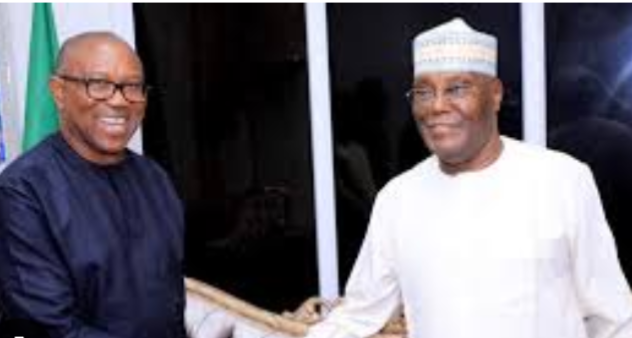
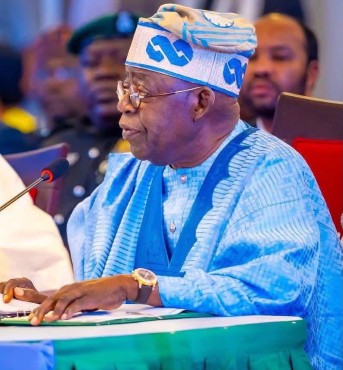
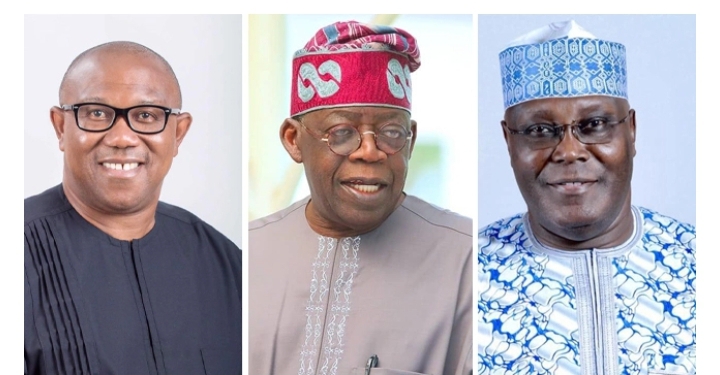
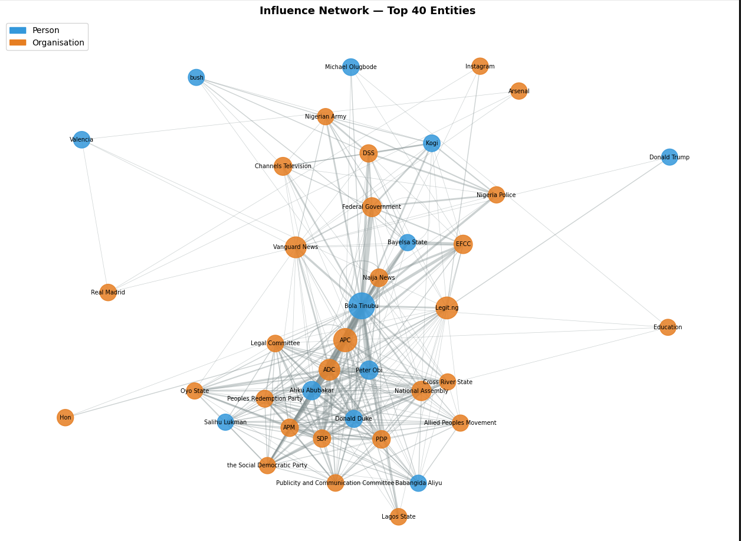
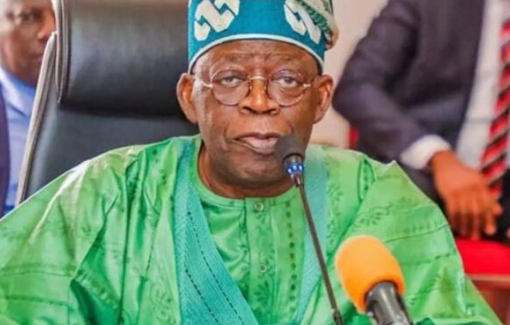
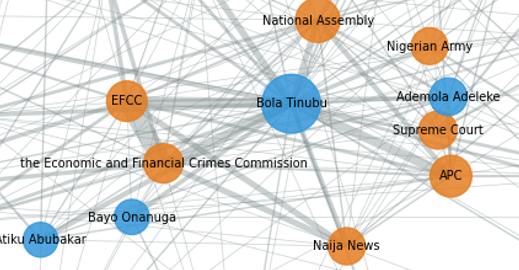
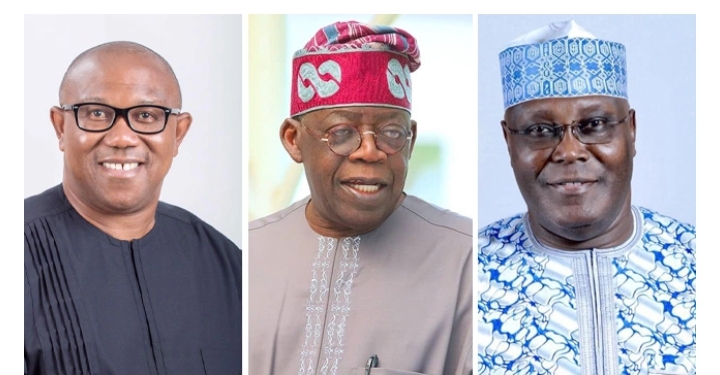
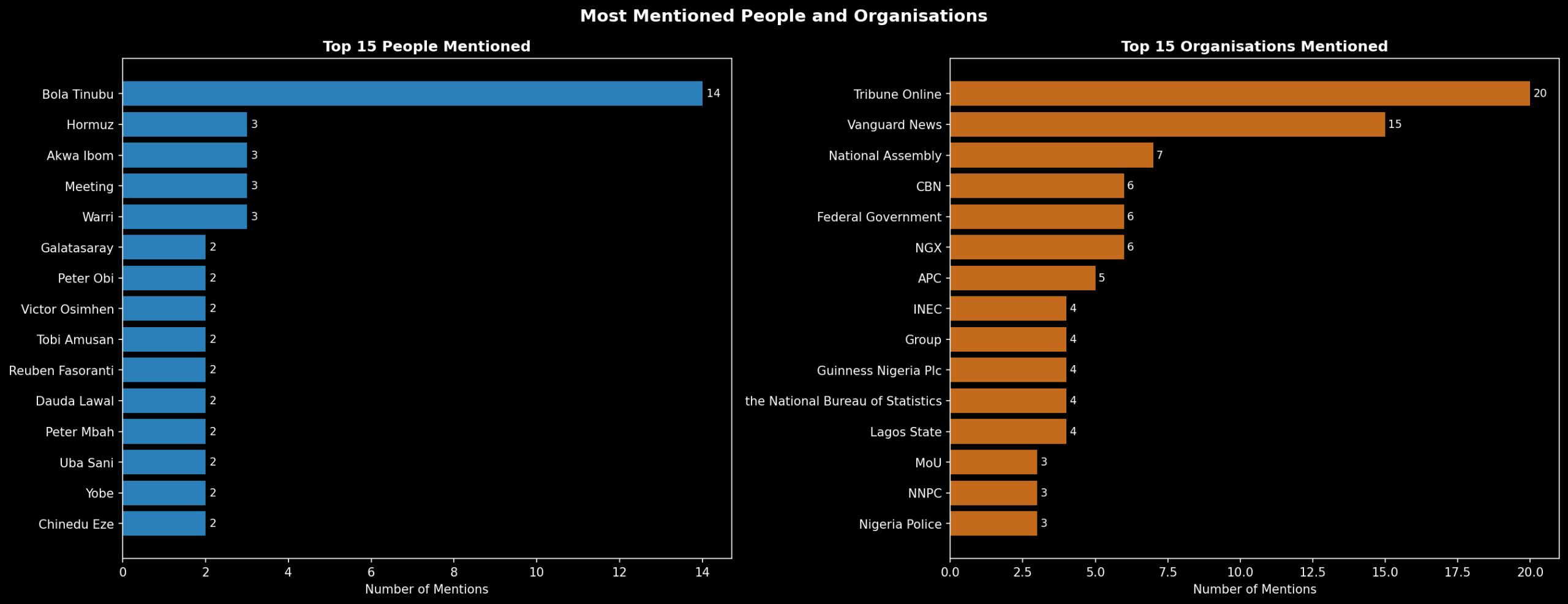
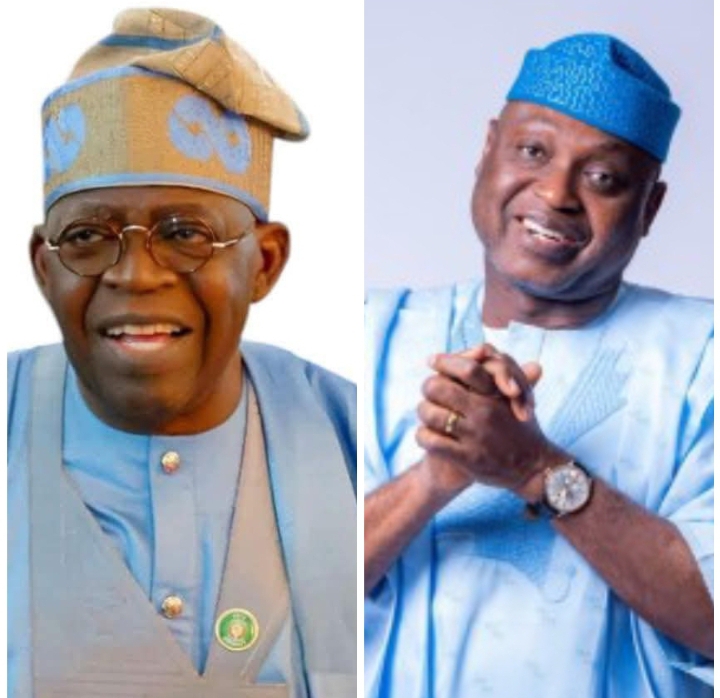
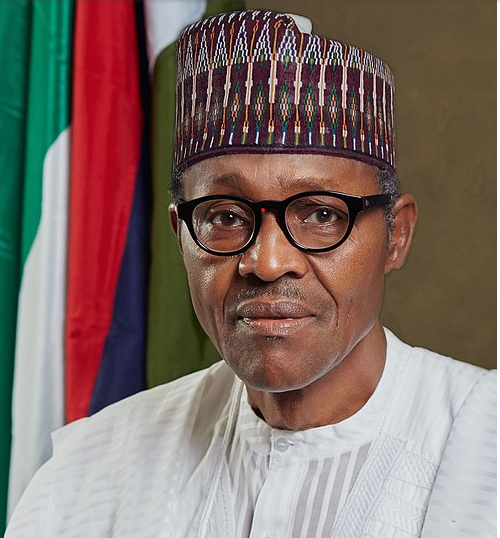
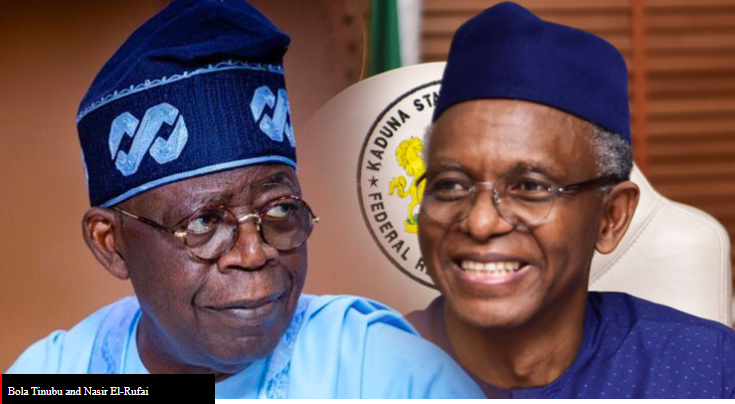
The answer starts with one name. President Bola Tinubu appeared 32 times in the campaign articles and 20 times in the election articles. Next came Atiku Abubakar with eight mentions in the campaign group, and Peter Obi with eight in the election group. Dele Alake appeared seven times and Phrank Shaibu four times. So, the race, at least in the news, has one clear centre, and everyone else is moving around it.
The same story shows up when we look at parties. The APC led the campaign articles with 34 links, and the ADC followed with 16. The PDP had eight, and the APM had seven. In the election articles, the APC had 16 links, INEC had 11, and the ADC and PDP had nine each. This means the APC and the ADC are the two names most often placed side by side, and not in a kind way.
The headlines show why. One read, “APC, ADC at daggers drawn over attack on Tinubu’s convoy.” Another said the APC accuses the ADC and NDC of sponsoring violence and spreading misinformation. These are serious claims from one side, and we are not saying who is right. But a country that trades such accusations 60 days before a vote needs calm, facts and proof, not more noise.
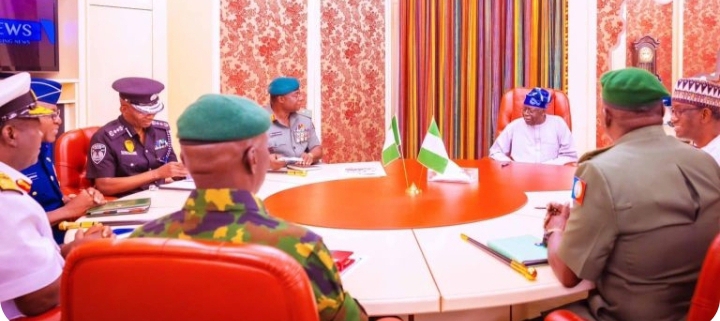
Violence is the thread that runs through the week. INEC warned against attacks on its staff and threatened sanctions. Former President Goodluck Jonathan spoke against political violence and ethnic division. Another headline said concerns and condemnations were rising as political violence surges and campaigns intensify. When the electoral umpire, a former president, and the press all raise the same alarm in one week, that is not a coincidence. It is a pattern.
Read Also: Atiku and Obi: What Nigeria’s Civic Data Says About a Divided Opposition
Still, the campaign is not all fear. Our data also shows people at work. In Anambra, the APC inaugurated a 350-member campaign council. In Kebbi, Tinubu campaigned, approved a dry port, and saw former governors declare support. In Abuja, the Youth Minister courted young voters for Tinubu’s second term with the line, “This is your government.” Atiku said Bauchi’s governor was the most receptive to his campaign, and the news also spoke of Atiku-Makinde alliance talks. So, the campaign is also about building teams, making promises and forming deals.
There is another quieter story inside the election data, and it is about the courts. One headline carried the voice of a judge, Justice Adefope-Okojie, who said courts must stop deciding election winners. Our evidence also pointed to the Abia South APC primary, where a candidate won with 15,982 votes, and the party said it was bound by a court judgment. The lesson is easy to see. Many fights over who wins are still being settled in court, even before the main vote has been held. That should worry anyone who wants votes, and not judges, to decide.
Not every campaign headline was about votes. The word “campaign” also appeared in stories about oil drilling and about climate campaigners at COP31. It is a good reminder that data needs careful reading, and a keyword alone does not tell the full story. That is why we always check the headlines behind the numbers.
Now let us step back and look at the whole week. Of the 2,223 articles, 950 were positive, and 1,273 were negative. That is about 43 per cent positive and 57 per cent negative. The average risk score was 0.504, which is right in the middle. But the middle can hide the edges. In total, 504 articles were high risk, and 87 were critical. Together, that is 591 articles, or about one in every four.
So, the overall week was mixed, but the political stories were much darker than the rest. That gap matters. It tells us the election season is pulling the national mood downward faster than other topics. In other words, the heat is not spread evenly. It is gathering around the campaign.
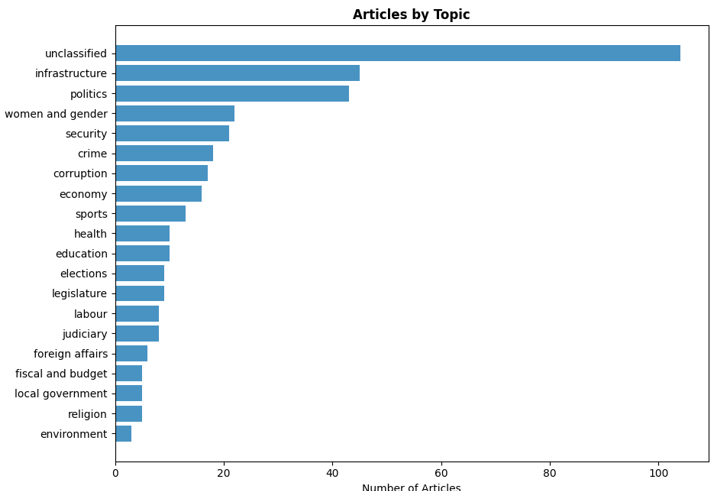
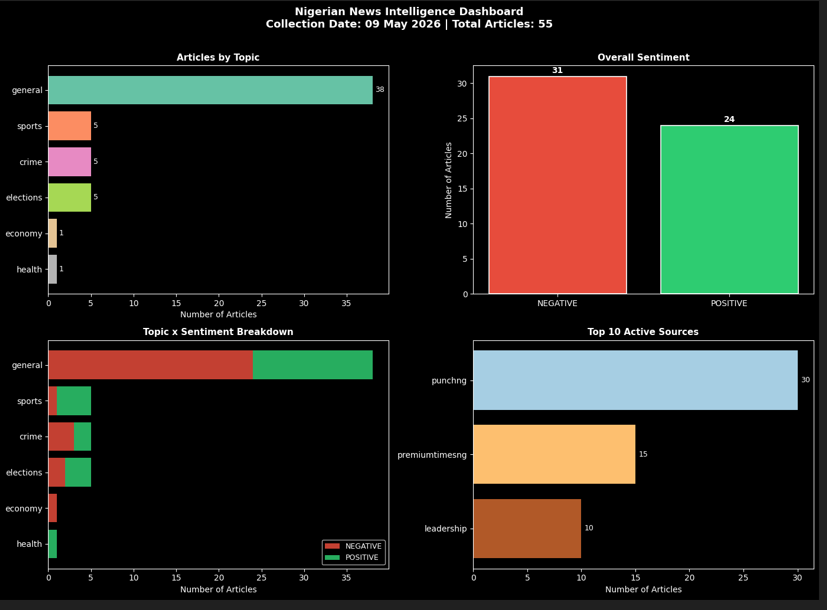
Next, let us look at what filled the news. The biggest group was “unclassified” with 499 articles, which means our system could not place them under one clear topic. Politics came next with 424 articles, then infrastructure with 299. Women and gender followed with 129, economy with 105, corruption with 91, and foreign affairs with 90. Legislature had 76, and religion had 65. One small detail stands out. The topic labelled “elections” had only 39 articles, yet election talk ran through hundreds of politics stories. This shows that the campaign has spilled over into almost every other subject.
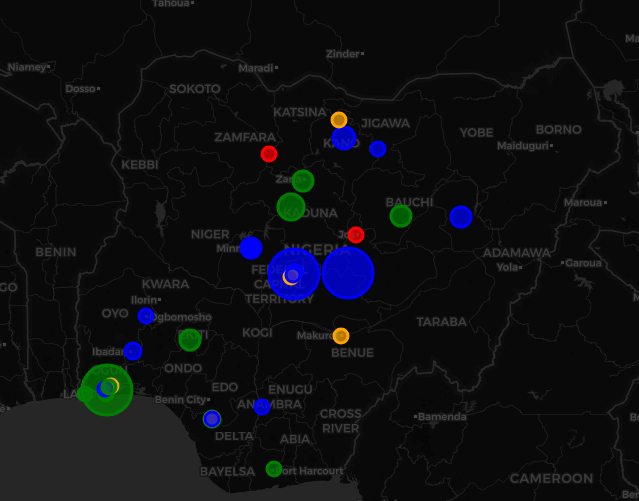
Where did all this happen? Nigeria as a whole led with 692 mentions. Abuja followed with 265 and Lagos with 234. Kano and Kaduna each had 65. Outside the country, the United States had 122 mentions, the United Kingdom 45, South Africa 44, and China 32. Abuja and Lagos are the centres of power and money, so their lead is no surprise. Even so, Lagos has its own election story. On Friday, December 4, 2026, AdvoKC Foundation and its partners will host the Lagos Governorship Hustings at the Marriott Hotel, Ikeja, with a focus on women and youth. That is a good sign, because it shows civic groups are creating space for questions and answers.
There is one more place on the map that deserves your attention, and that is Garki. Our system found it to be the highest-risk location this week, with a risk index of 0.95. That score is very high. It means that when Garki appeared in the news, it was almost always in the context of serious or worrying events. We cannot say more than the data shows, but leaders should watch it closely.
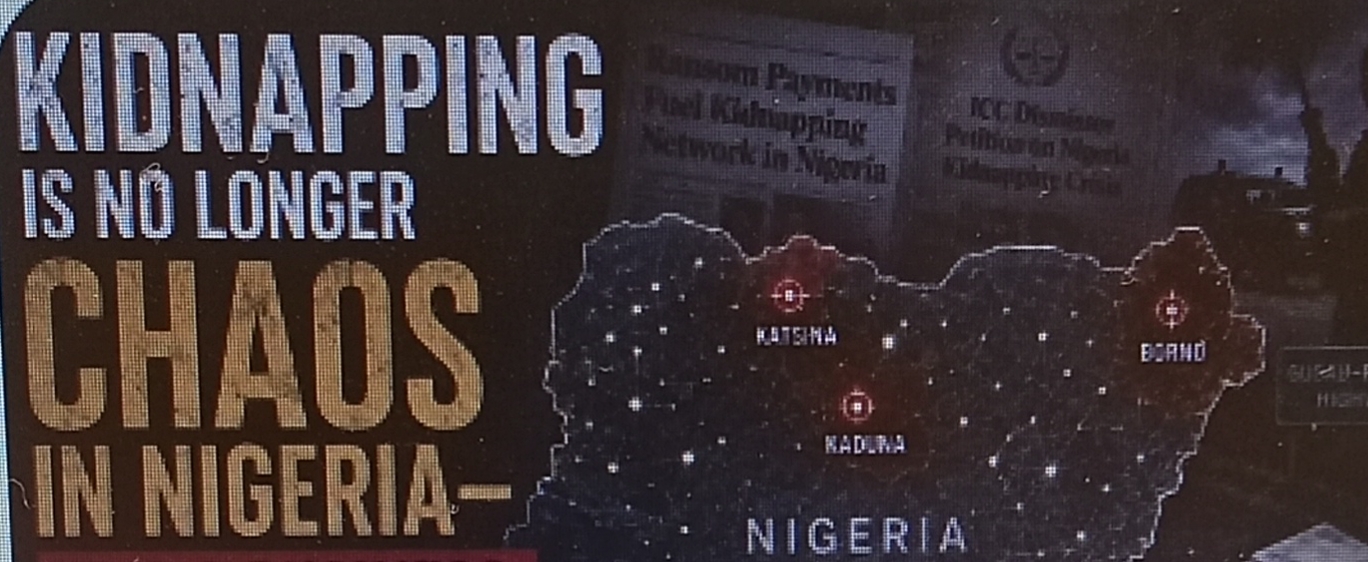
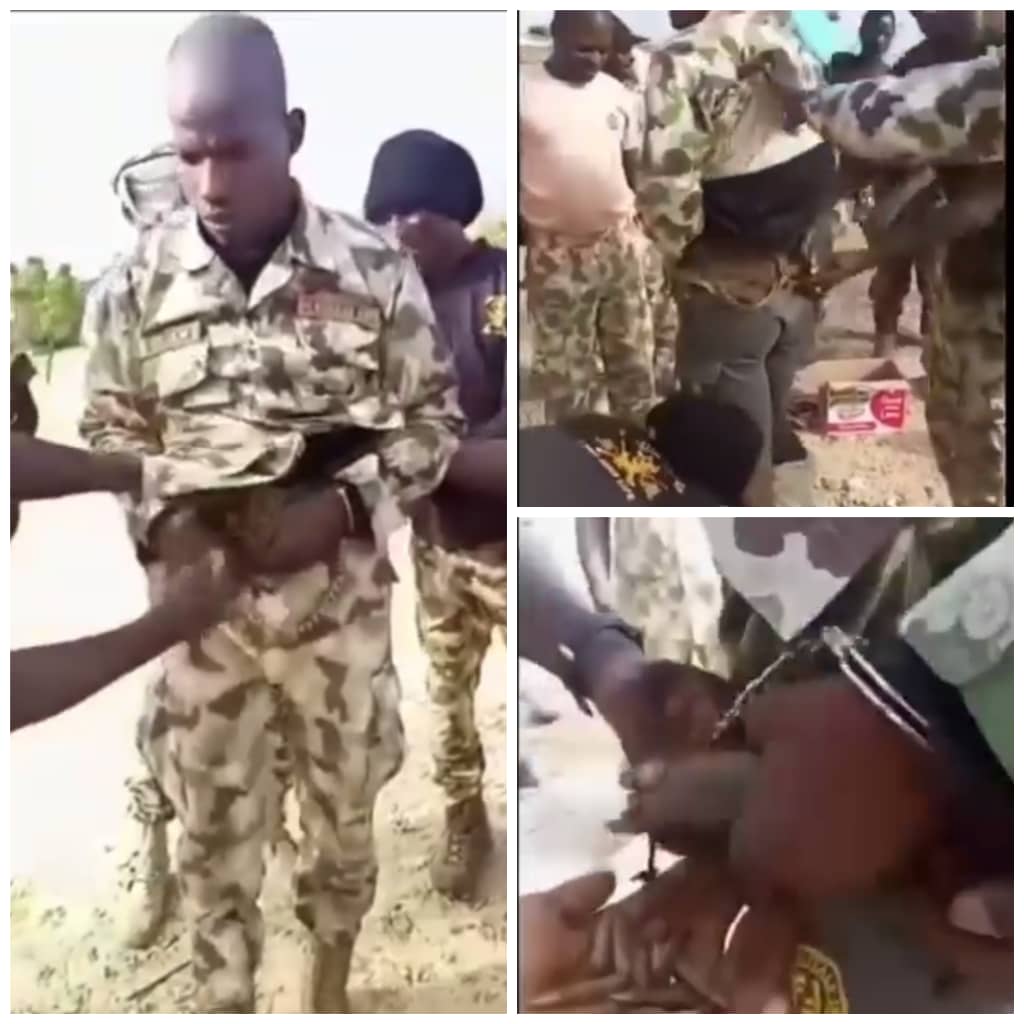
Our system also raised an early warning on security. The risk score for security stories was 0.93, which is very high, yet the topic got below-average coverage, with only 53 articles. That is a dangerous mix. It means a big problem is getting little attention. One report this week said terrorists killed 835 people in October. Another critical story had Tinubu asking Plateau for forgiveness and promising decisive action against insecurity. If violence at campaign events rises while insecurity is already high, the pressure on security forces will be heavy.
This is where the numbers tell us to be careful. Our system found 134 articles that used positive words to describe high-risk events. One example was a piece called “Chike-Obi’s AMCON Proposal: The Danger of a Hasty Sunset.” Positive tone on a risky story can make readers feel safe when they should be alert. It can also be a sign of spin. Readers should look at what happened, not only at how the story sounds. We also found two pairs of stories that were about the same thing but placed under different topics. Such hidden links remind us that big issues often travel under different names.
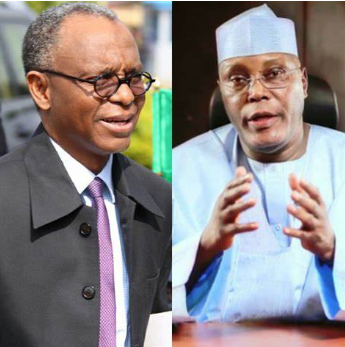
Now, who dominated the week? Bola Tinubu had 399 mentions, nearly four times Atiku Abubakar’s 100. Peter Obi had 91, Rabiu Kwankwaso 46, Kashim Shettima 37, Goodluck Jonathan 32, and Nyesom Wike 31. Tinubu’s lead is partly because he is the sitting president, so almost every national story touches him. But it also means challengers must work harder to be heard. A name that is not in the news is a name that is not in the minds of voters.
So, what should be done now? For government and security agencies, the first step is to protect people and election staff. Take every INEC warning seriously, put extra eyes on Garki and other hotspots, and treat attacks on campaign convoys as crimes, no matter whose convoy it is. Speak plainly about security as well, because a low-coverage, high-risk topic is exactly the one that can explode without warning. And ask the courts and the parties to settle disputes early, so that the final result belongs to voters.
For political parties, the advice is simple. If you accuse a rival, bring evidence to the police and to INEC, and not only to the microphone. Tell your supporters to keep campaigns peaceful. For journalists and civil society, our advice is to dig deeper than the loud headlines. Check stories that sound too positive when the facts look risky. Cover security more, because the data shows it is under-reported. Support more town halls and hustings like the one planned in Lagos, and invite women and young people to ask the hard questions. And when you report a claim, say who made it and what proof they offered.
For ordinary Nigerians, the message is this: the election season has already begun, and it is shaping your daily news. Do not let anger or fake stories decide for you. Check your voter registration, read widely, and ask every candidate what they will do about security, jobs, and prices. Your vote is your voice, and it is much louder when you use it with knowledge.
In the end, this week’s data tells one clear story. The 2027 election campaign in Nigeria is moving faster than many expected, and its mood is tense. The good news is that numbers like these are early warnings, and early warnings can be used to prevent harm. Leaders, parties, the press, and voters can all still change the direction of this story. To follow the facts as they develop, visit EphraimHill DC every week for clear, honest, data-driven intelligence on Nigeria.
At EphraimHill DC, we believe that information should do more than describe events; it should help people understand patterns, identify emerging risks and make better decisions. Through our Nigeria Weekly Civic Data Intelligence platform, we analyse thousands of news reports to identify developments, political trends, geographical patterns and issues requiring public attention. Our objective is simple: to turn information into intelligence that supports better governance, informed citizenship and public accountability.
EphraimHill DC is Nigeria’s civic data intelligence platform, where we track, analyse, and interpret national developments to help Nigerians understand the deeper patterns behind public events. Our analysis is institutional, evidence-based, and politically neutral.