EphraimHill DC | Nigeria Weekly Civic Data Intelligence | October 25–31, 2026.
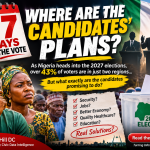
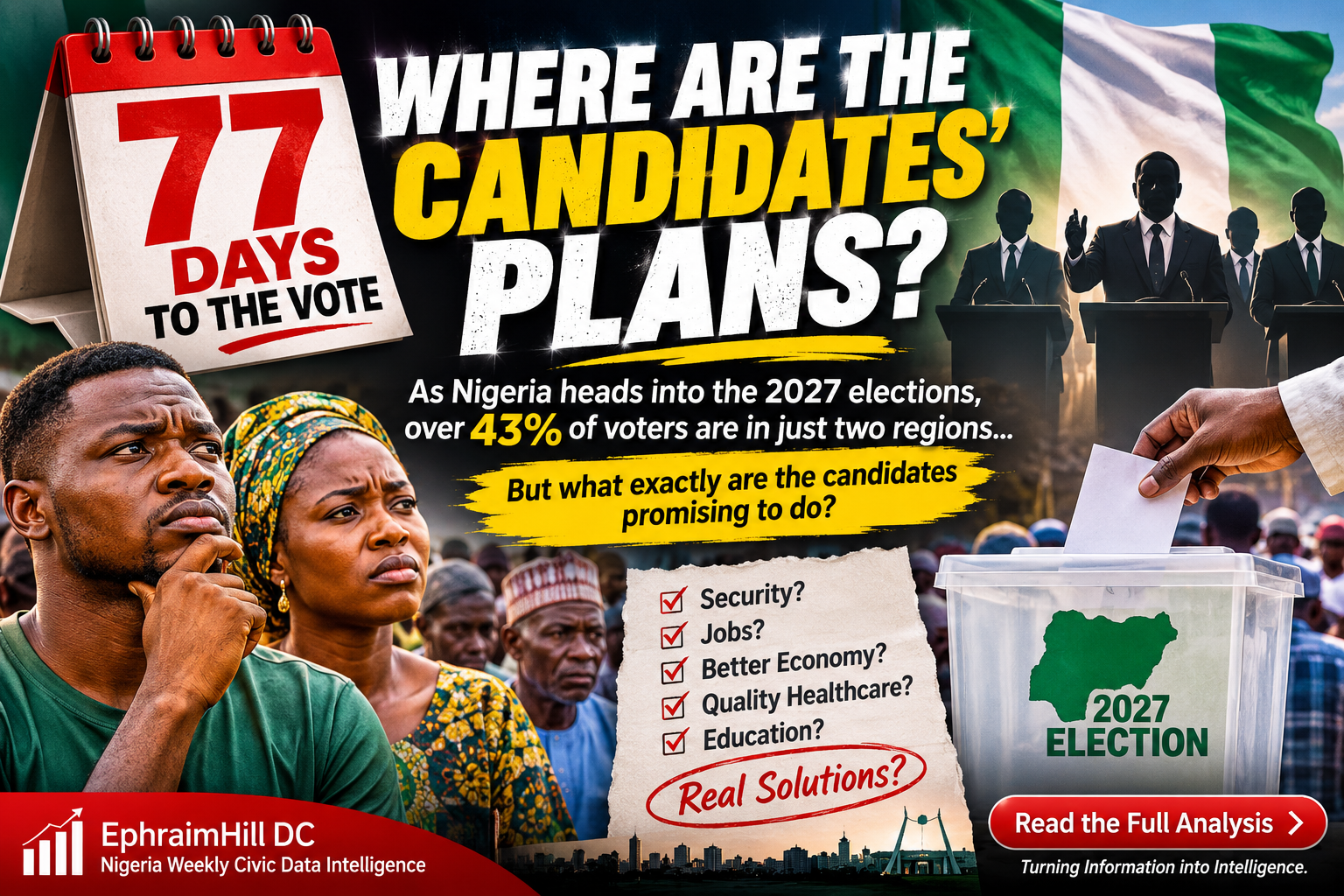
Nigeria’s 2027 presidential election is approaching, but one question should concern every voter: what exactly are the presidential candidates asking Nigerians to vote for? With just 77 days remaining before the scheduled January 16 election, political parties are busy building alliances, exchanging accusations, and positioning their candidates for victory. Yet, beyond the familiar political drama, Nigerians are still waiting to see clear, practical, and measurable plans to address the problems confronting the country. Our Nigeria Weekly Civic Data Intelligence analysis of 2,359 news reports published between October 25 and 31 reveals an interesting picture of the coming election, the geographical distribution of voting strength, the issues dominating public attention, and the risks that political leaders cannot afford to ignore.
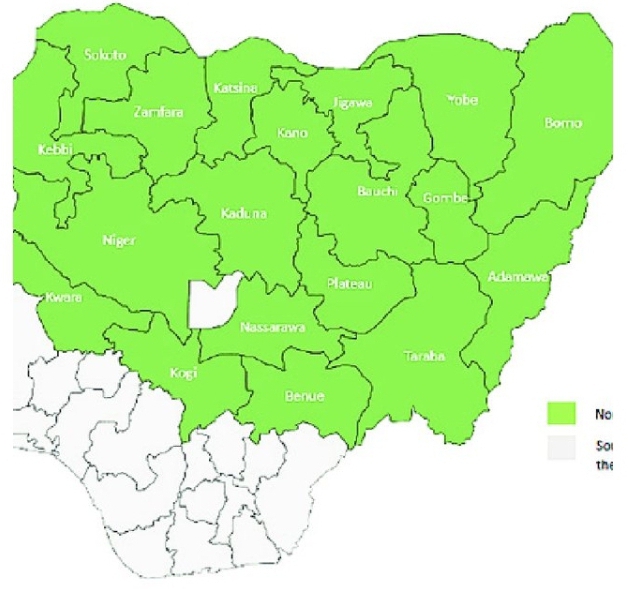
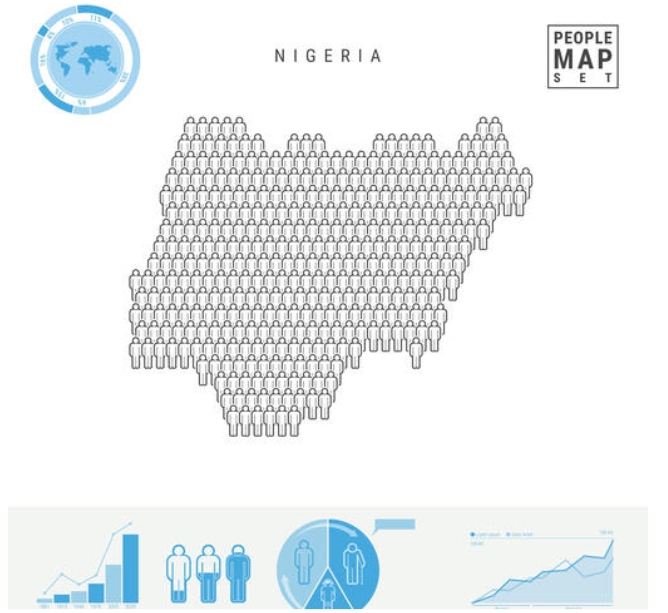
Let us begin with the numbers because they reveal where much of the electoral battle is likely to take place. According to the 2026 INEC voter register figures used in this analysis, the North-West has 25,083,411 registered voters, while the South-West has 19,614,274. Together, these two regions account for 44,697,685 registered voters out of Nigeria’s national total of 103,428,715, representing approximately 43.2 per cent of the entire electorate. In other words, almost half of Nigeria’s registered voters are concentrated in just two of the country’s six geopolitical zones.
This explains why the North-West and South-West will be particularly important in determining the outcome of the presidential election. The North-West has the largest voting population, followed by the South-West, while the North-Central comes third with approximately 16.97 million registered voters. A Vanguard analysis published during the week similarly observed that the road to Aso Rock runs through these two regions. However, politicians and political commentators must not overlook an important distinction: having the largest number of registered voters does not automatically translate into winning an election.
Read Also: Nigeria’s Opposition 2027: 60% of This Week’s Coverage Says Unity Is Slipping.
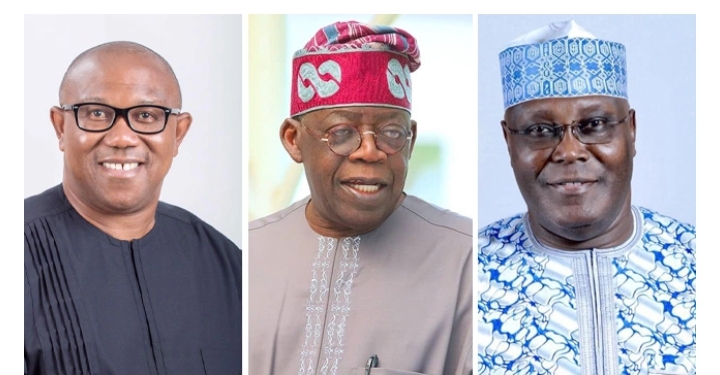
What matters is how many registered voters actually turn out, how they distribute their votes among the candidates, and whether political parties can mobilise support beyond their traditional strongholds. The 2023 presidential election demonstrated this clearly. Bola Tinubu won with 8,794,726 votes, ahead of Atiku Abubakar, who secured 6,984,520, and Peter Obi, who received 6,101,533. Tinubu obtained 2,542,979 votes in the South-West and 2,652,235 in the North-West, giving him approximately 5.2 million votes from the two regions, or about 59 per cent of his national total.
Yet, neither region voted as a single political bloc. In Kaduna, Atiku defeated Tinubu with 554,360 votes against 399,293, while Rabiu Kwankwaso secured Kano for the NNPP. The South-West also produced an interesting result, as Peter Obi defeated Tinubu in Lagos by just 9,848 votes, polling 582,454 against Tinubu’s 572,606. These results should remind every presidential candidate that regional identity and historical political loyalty cannot guarantee electoral victory. The votes may be concentrated geographically, but political preferences remain competitive.
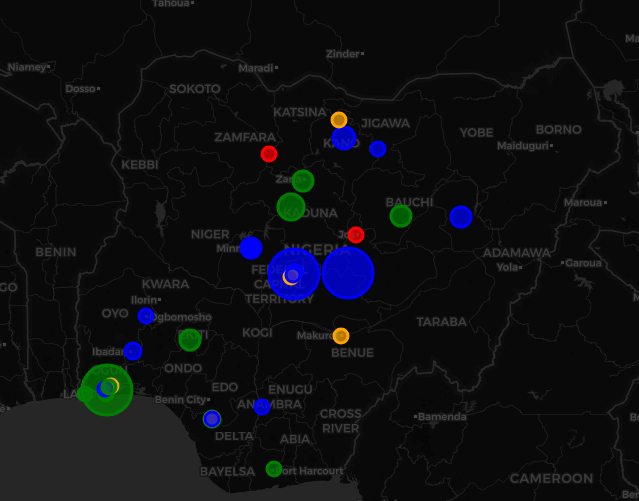
Interestingly, our geographical data provides another perspective on this electoral map. Lagos recorded 183 location mentions in the week’s news coverage, making it the most frequently mentioned individual state. However, Kaduna recorded 112 mentions, Kano 50 and Katsina 38, bringing the combined mentions for these three North-West states to 200, higher than Lagos alone. Although media mentions do not establish electoral preferences or prove that journalists are deliberately following voter concentration, the figures show that these politically important locations also attracted considerable media attention during the week.
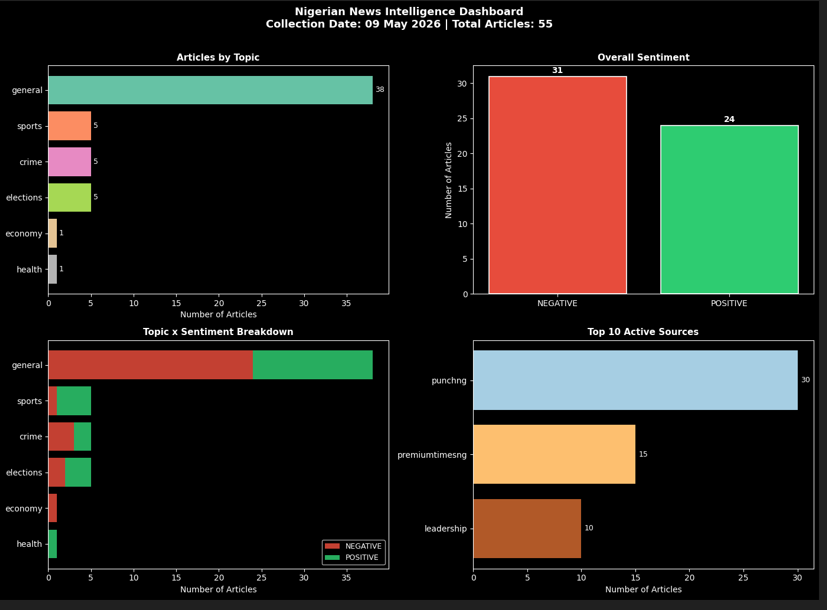
But beyond the geographical distribution of voters, the wider information environment presents another challenge. Of the 2,359 articles analysed, 1,408 carried negative sentiment, while 951 were classified as positive. This means approximately 60 per cent of the coverage had a negative tone, compared with 40 per cent that carried positive sentiment. Our average national risk score stood at 0.49 on a scale of zero to one, suggesting a moderate overall risk level, but a closer examination reveals developments that deserve greater attention.
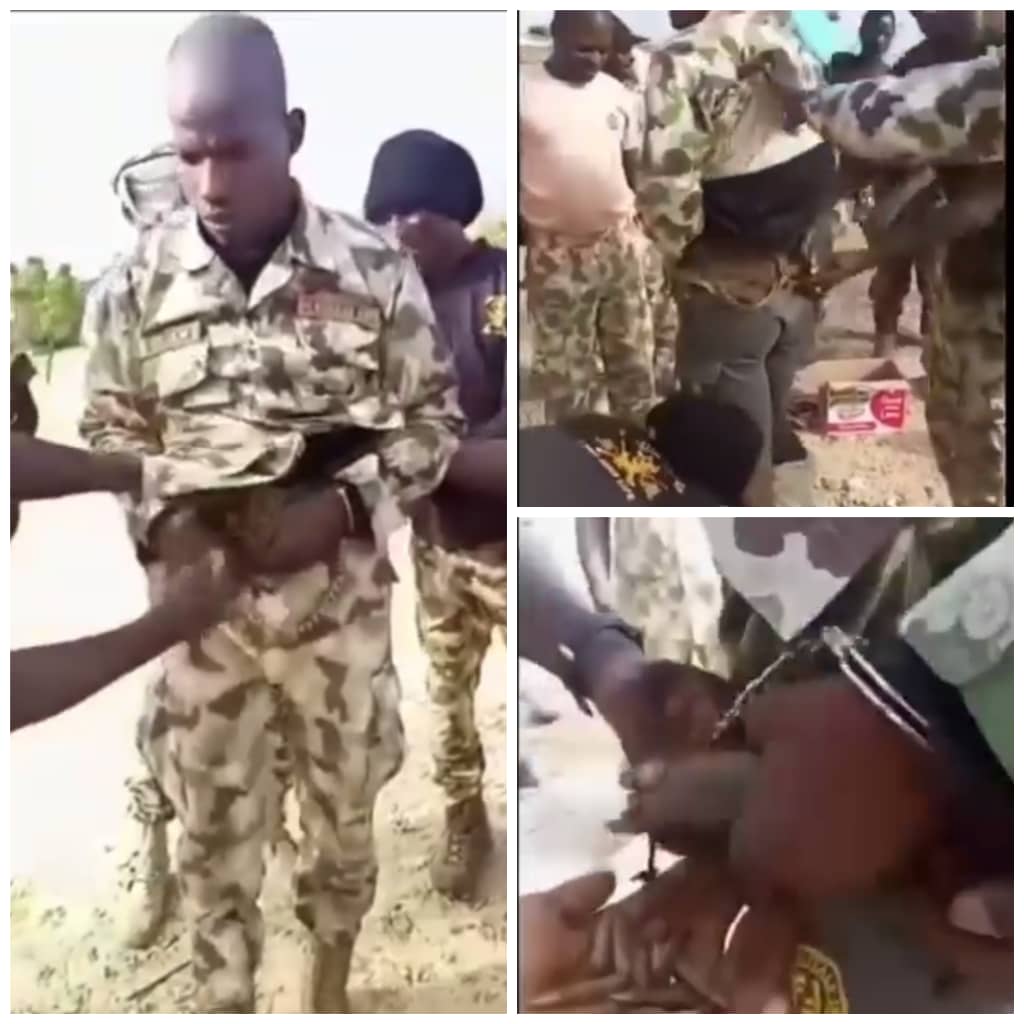
In particular, 80 articles were classified as critical, while another 459 were rated high risk. Together, these 539 reports represent approximately 22.8 per cent of all the stories analysed. Among the critical reports were accounts of military operations in Borno, where troops reportedly neutralised six terrorists and arrested 11 suspected collaborators, an oil spill reportedly affecting 216 communities in Delta State, and an attack in Plateau State in which bandits reportedly killed a woman and injured two others while residents were harvesting groundnuts. These are not merely statistics in a database; they represent threats to lives, livelihoods, and community stability.
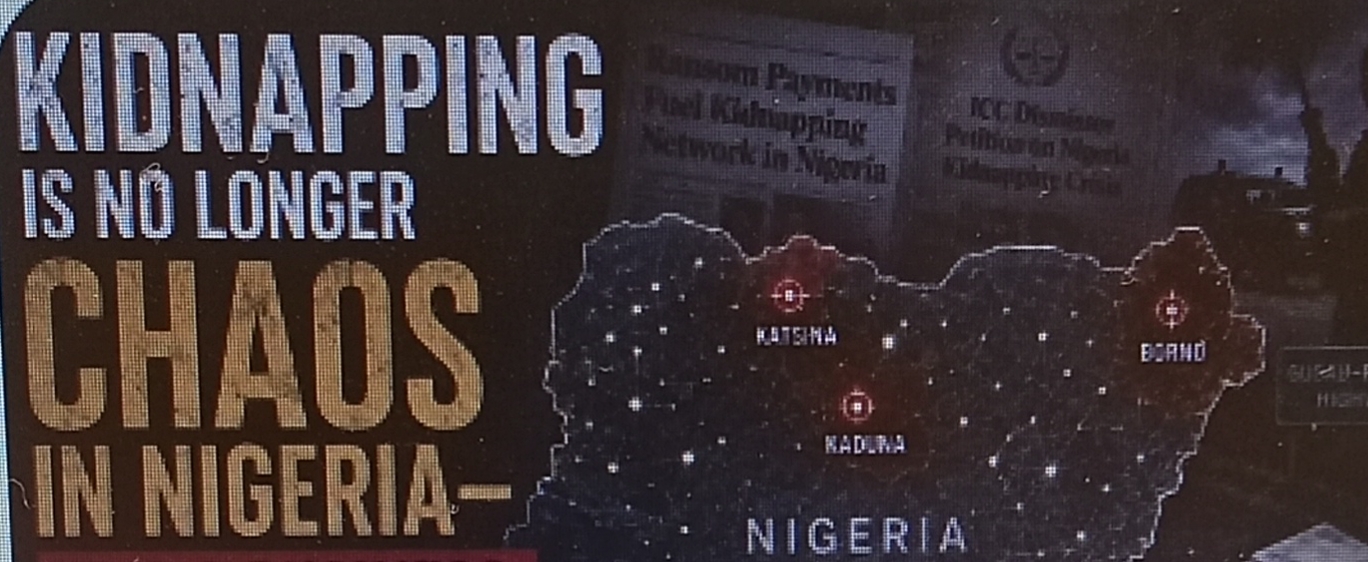
Read Also: Kidnapping Is No Longer Chaos in Nigeria: It Is Now a Big Business
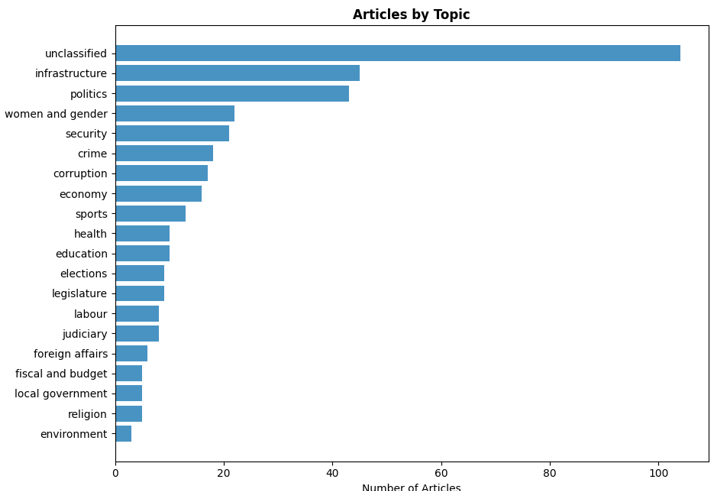
Our topic distribution also raises an important question about the quality of public discussion. Politics accounted for 385 articles, followed by infrastructure with 286, women and gender with 140, health with 138, legislature with 116, and economy with 104. Crime generated 91 reports, corruption 78 and security 68, while education and elections recorded 54 articles each. The largest category, however, was unclassified, with 571 articles, representing approximately 24.2 per cent of the dataset.
Although politics naturally attracts greater attention during an election season, the figures suggest that political activities occupy a prominent position in the news environment compared with several policy areas that directly affect citizens. This does not necessarily mean Nigerians are less interested in education, healthcare, employment, or security. Rather, it raises questions about what receives the most attention in the media and whether political reporting is giving sufficient space to the practical issues that should determine electoral choices. More importantly, when political personalities dominate public discussion, there is a danger that the substance of governance becomes secondary to the competition for power.
That concern becomes even more significant when we consider the debate surrounding presidential candidates’ manifestos. During the week, the CountryFirst Movement reportedly reviewed the policy documents of 11 out of the 18 presidential candidates on INEC’s list. According to its assessment, only one candidate presented what it considered a comprehensive manifesto, while the other ten submitted shorter policy briefs that lacked sufficient details on implementation, timelines and proposed programmes.
Nevertheless, the larger question raised by the assessment deserves serious attention. Nigerians are entitled to know what each candidate intends to do with the enormous powers of the presidency if elected. A promise to create jobs, improve electricity, strengthen national security or reduce poverty is not a complete policy proposal without an explanation of how it will be achieved, how much it will cost and when citizens should expect measurable results. A manifesto should not be a collection of attractive promises designed to win applause at campaign rallies; it should be a practical document against which the performance of an elected government can be measured.
Other voices have also raised concerns about the quality of political engagement. Journalist Rufai Oseni questioned the absence of manifestos and presidential debates involving major political parties. The Presidency also reportedly criticised the NDC over what it described as a missing manifesto. It is worth recalling that INEC Chairman, Professor Amupitan, had urged political parties during the peace accord process in August to conduct issue-based campaigns and present measurable policy commitments. More than two months later, the demand for substantive engagement remains relevant.
The connection between these missing policy details and the geographical distribution of voters is particularly important. A registered voter in the North-West has the same constitutional voting right as a registered voter in the South-West, but the challenges confronting their communities may differ considerably. In parts of the North-West, insecurity, displacement, agricultural disruption and the cost of living are major concerns. In the South-West, candidates must address urban pressures, employment, transportation, electricity, economic hardship and the performance of public institutions. A presidential candidate who cannot explain how national policies will respond to these different realities may find it difficult to convert political visibility into genuine public support.
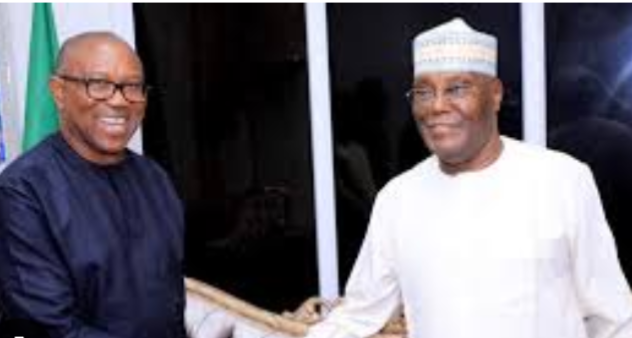
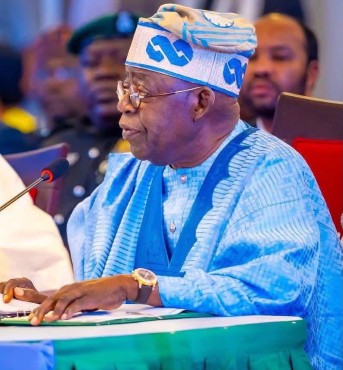
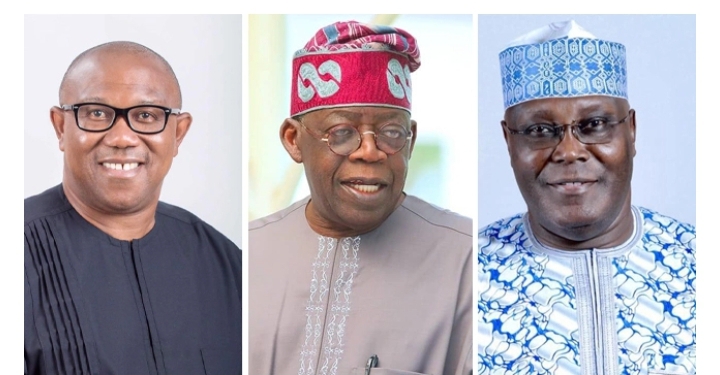
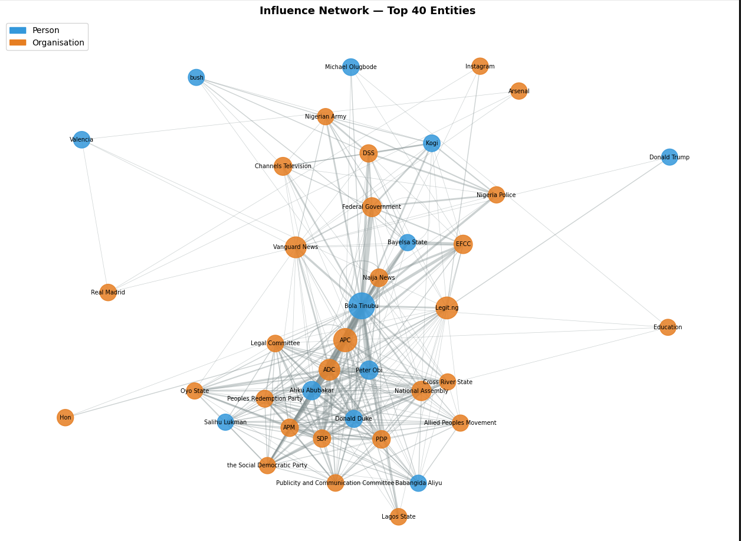
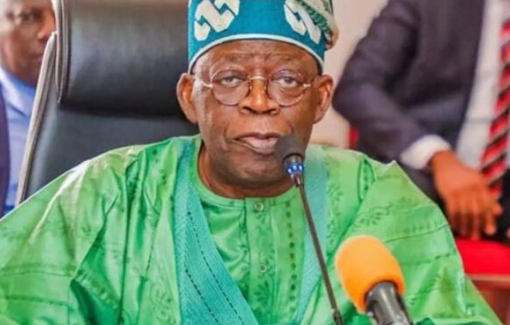
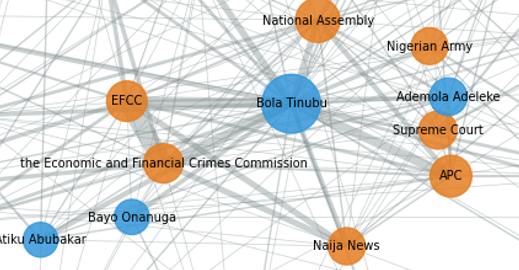
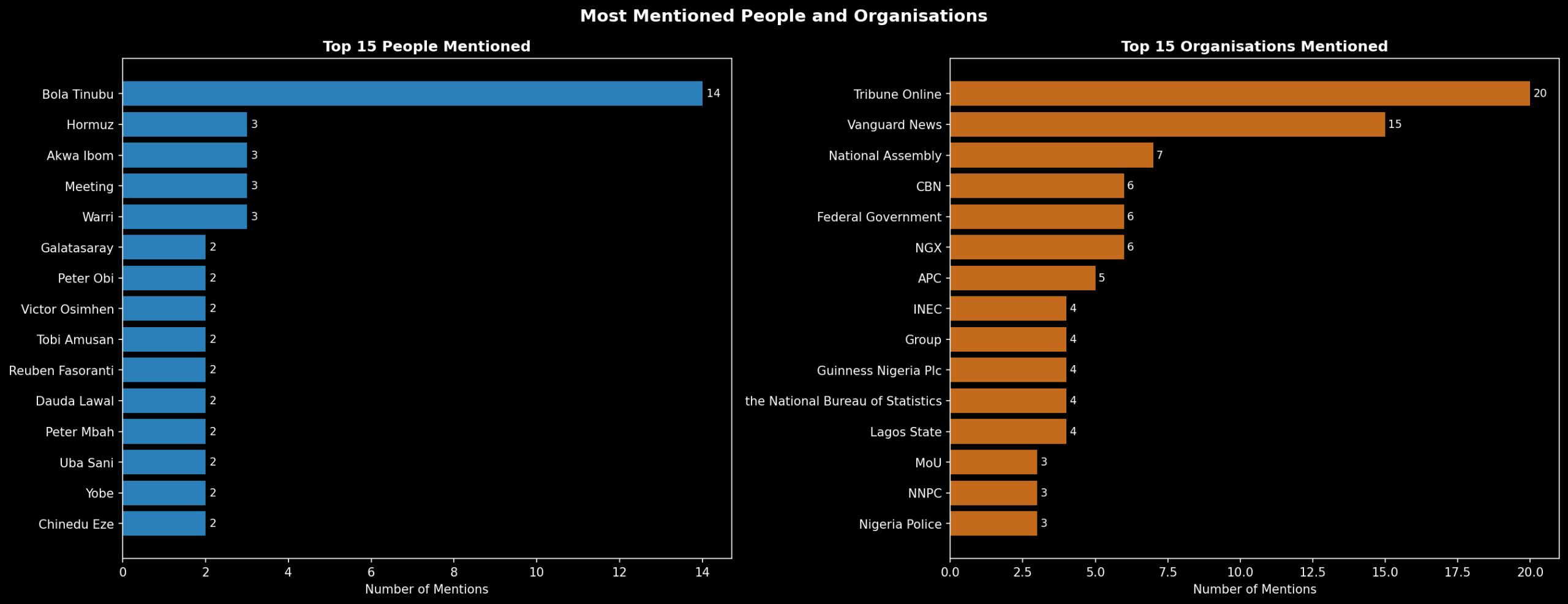
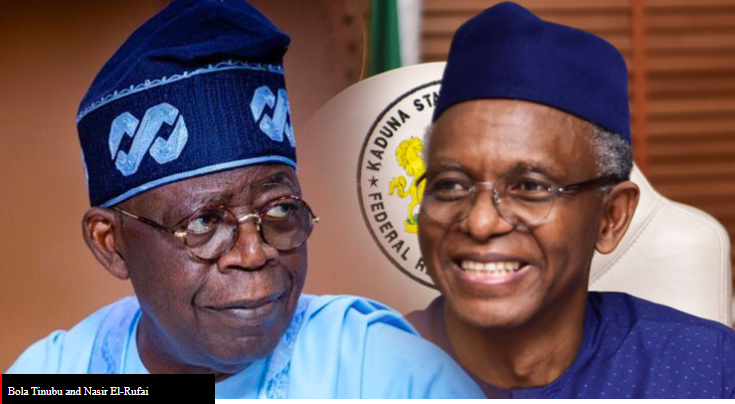
Meanwhile, our political entity analysis shows that President Bola Tinubu dominated the week’s news coverage with 419 mentions. Atiku Abubakar followed with 77, Peter Obi with 64, Nyesom Wike with 41, and Omoyele Sowore with 36, while Hope Uzodinma and Godswill Akpabio recorded 31 mentions each. Tinubu’s mentions were approximately 5.4 times Atiku’s and 6.5 times Obi’s, accounting for about 60 per cent of the combined mentions of the seven political figures tracked. This is a substantial difference in media visibility, but it would be analytically incorrect to interpret it as evidence that Tinubu enjoys five or six times the political support of his closest challengers.
As data professionals, we must distinguish between visibility, sentiment, and electoral popularity. A sitting president naturally attracts considerable media attention because of government activities, policy decisions, public controversies, and official engagements. Therefore, the higher mentions do not necessarily represent campaign activities or public opinion. However, the relatively lower mentions for opposition figures raise questions about their visibility and the effectiveness of their communication strategies as the election approaches.
The week’s political headlines also demonstrate the increasingly competitive nature of the contest. Reports included the NDC’s planned unveiling of its campaign council, Omoyele Sowore’s criticism of the NDC and Peter Obi, and a dispute involving the Oyo APC campaign and an APM governorship candidate. Meanwhile, Peter Obi had previously promised to increase electricity generation and distribution by at least 10,000 megawatts within four years if elected. Whatever one’s political preference, such a commitment provides a measurable starting point for public scrutiny. Candidates should be encouraged to present more specific targets and explain the resources, institutions and implementation strategies required to achieve them.
Beyond these headline developments, our Nigeria Weekly Civic Data Intelligence system identified four signals that deserve closer attention. The first concerns crime, which recorded a risk score of 0.95 despite generating only 91 articles, or less than four per cent of the entire dataset. Reports included a police investigation into the death of a hotel worker in Abuja and NDLEA operations involving cocaine and cannabis arrests. The combination of a high-risk score and relatively low coverage suggests that crime deserves closer monitoring, although the score alone does not establish that criminal activity is increasing nationally.
The second signal concerns Foron District in Plateau State, which recorded the highest geographical risk index at 0.95. Our available evidence is not sufficient to establish precisely which incidents produced this score, so it would be irresponsible to present the result as proof of a particular security situation in the district. However, the week’s reporting included a critical account of a bandit attack on a farming community in Plateau State. The Foron reading should therefore be treated as an early investigative signal requiring further examination through police records, local intelligence and community reports, rather than as a final security assessment.
These findings are not presented merely to describe what happened during the week. Their value lies in what they can help government institutions, political parties, civil society, and the media anticipate and address. INEC should intensify voter education, particularly in regions with large registered populations, while reminding citizens that voter registration becomes meaningful only when people participate in the election. Security agencies should pay closer attention to vulnerable farming communities, rural roads, and locations generating repeated security alerts. Government information agencies should also ensure that public communication is supported by verifiable evidence rather than relying solely on favourable headlines and official statements.
Political parties and presidential candidates have an equally important responsibility. They should publish comprehensive manifestos containing clear policy priorities, implementation strategies, funding arrangements and measurable timelines. They should also participate in public debates where Nigerians can compare their positions on security, education, healthcare, employment, electricity, and economic management. A candidate seeking the presidency should be prepared to explain not only what they intend to achieve but also how they will achieve it. Campaign slogans may generate excitement, but they cannot replace credible policy commitments.
Civil society organisations and NGOs should help voters assess the candidates through independent scorecards that examine their proposals against practical national needs. Journalists should move beyond personality-driven political reporting and consistently ask candidates the same difficult questions about their first 100 days, funding priorities and expected results. They should also devote greater attention to crime and rural security, particularly where our monitoring indicates a mismatch between the seriousness of reported events and the volume of coverage. For ordinary Nigerians, the responsibility is equally straightforward: verify your voter registration, collect your Permanent Voter Card and demand clear answers whenever a candidate makes a promise. Ask how the promise will be fulfilled, how much it will cost, and when the results will become visible.
Ultimately, this week’s findings reveal that the 2027 presidential election will be fought across a country where electoral strength, public concerns and political expectations do not always move in the same direction. The North-West and South-West may hold more than 43 per cent of registered voters, but neither region can be treated as the automatic possession of any political party. Media visibility may give some candidates an advantage in public recognition, but recognition is not the same as trust. And without credible plans for addressing insecurity, economic hardship, unemployment, poor infrastructure and declining public confidence, political mobilisation alone may not be enough to secure a convincing mandate.
Seventy-seven days may be sufficient for political parties to intensify their campaigns, but building public confidence requires more than rallies, endorsements and political alliances. Nigerians deserve to know what their next president intends to do differently, how those promises will be funded and what evidence will demonstrate that they are being fulfilled. The votes are registered, the political machinery is moving, and the country is watching. What remains missing is a clear, measurable, and convincing account of what the candidates intend to do with the mandate they are asking Nigerians to give them.
At EphraimHill DC, we believe that information should do more than describe events; it should help people understand patterns, identify emerging risks and make better decisions. Through our Nigeria Weekly Civic Data Intelligence platform, we analyse thousands of news reports to identify developments, political trends, geographical patterns and issues requiring public attention. Our objective is simple: to turn information into intelligence that supports better governance, informed citizenship and public accountability.
EphraimHill DC is Nigeria’s civic data intelligence platform, where we track, analyse, and interpret national developments to help Nigerians understand the deeper patterns behind public events. Our analysis is institutional, evidence-based, and politically neutral.