EphraimHill DC- Weekly Civic Data Intelligence | 29 Aug 2026 |By Idowu Ephraim Faleye
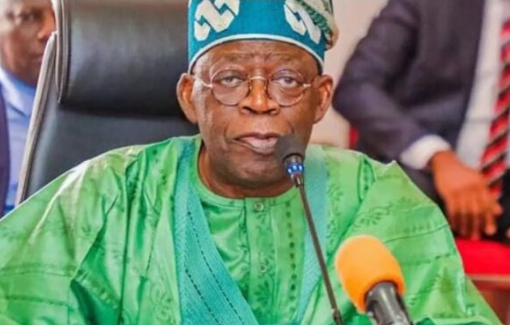
Tinubu’s Rainbow Coalition Is Outpacing Nigeria’s Opposition, and this week’s numbers make that gap difficult to ignore. Thirteen articles tracked the coalition story this week, compared with just nine about the opposition camp trying to challenge it. That may not look like a huge difference, but it becomes significant when viewed against the 2,118 stories about Nigeria tracked during the week. The coalition attracted almost 45 percent more coverage than its direct opposition storyline, suggesting that something important is taking shape beyond the headlines.
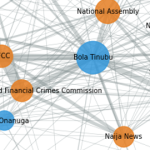
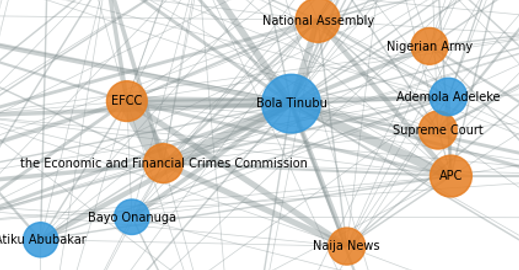
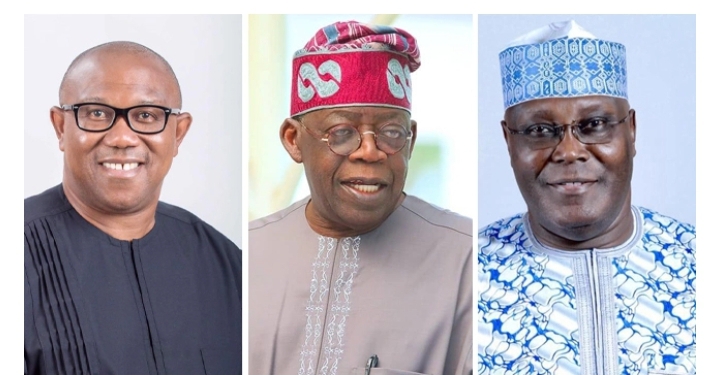
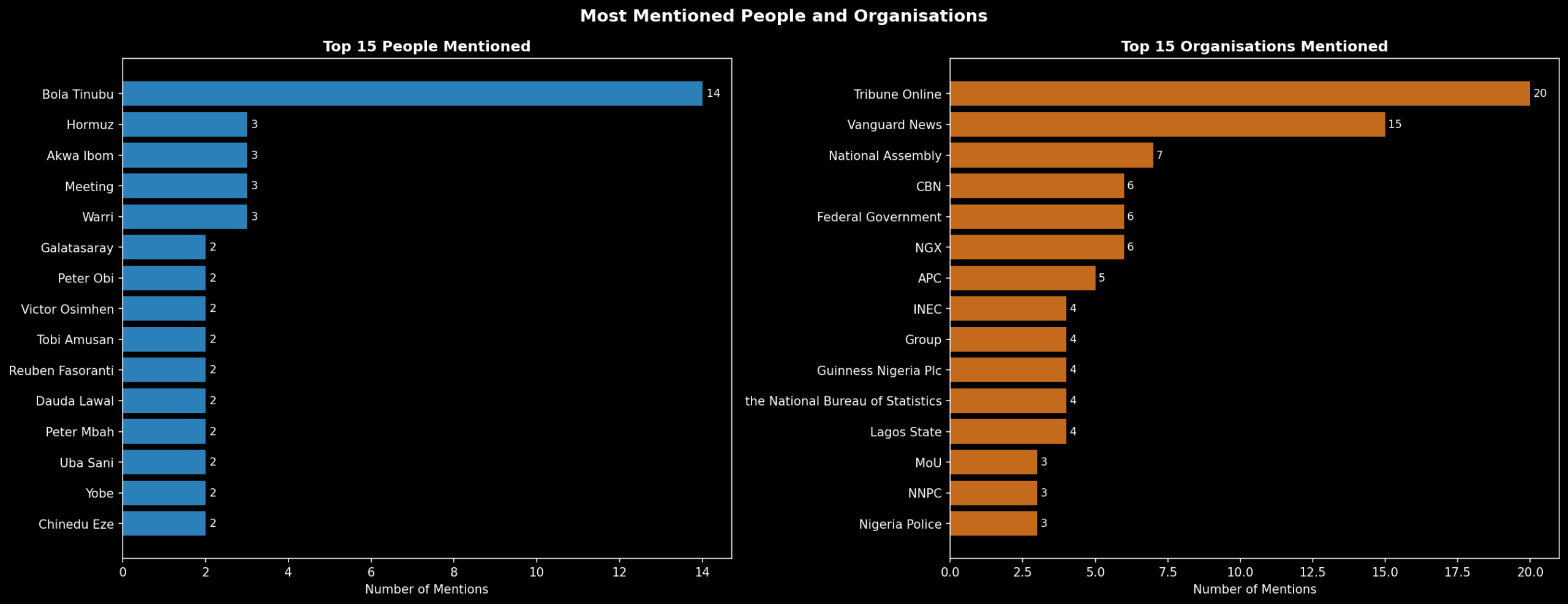
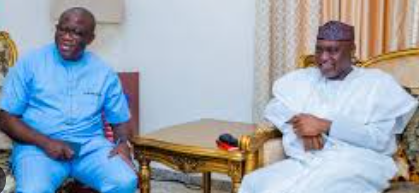
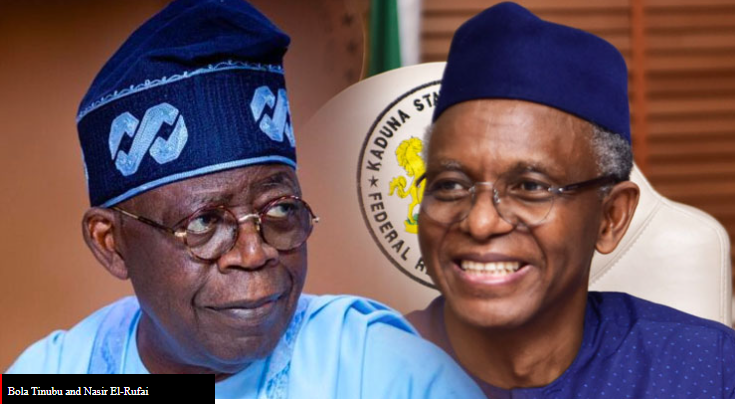
The people driving this coalition story make the picture even clearer. Bola Tinubu appeared in 10 of the 13 coalition-related articles, while Nyesom Wike and Atiku Abubakar were each mentioned seven times. Peter Obi and Bukola Saraki followed with four mentions each. This tells us that the political contest ahead of 2027 is no longer simply about two major political figures. Several influential political actors are positioning themselves, building relationships and testing where they may stand.
The organisations connected to the story tell a similar story. The PDP and the National Assembly were each mentioned six times, while the APC appeared five times and Kwara State four times. The repeated reference to Kwara is particularly interesting because it places Bukola Saraki’s political base within the wider national coalition conversation. One senator was even quoted as saying Saraki’s support for the proposed rainbow coalition could strengthen Tinubu’s chances of winning another term. Whether that prediction proves correct or not, it shows how seriously the coalition-building process is already being viewed.
The opposition side, however, presents a very different picture. Of the nine articles tagged to the opposition, 66.7 percent carried a negative tone, compared with only 33.3 percent that were positive. That is a significant imbalance. Some reports described the PDP and ADC as still struggling with internal disagreements and questions about their relevance, while the International Republican Institute was reportedly involved in efforts relating to the situation.
Then there was Wike’s own statement that his role was to give opposition party members high blood pressure. The statement may sound like political banter, but it also reveals something about the current balance of power. Wike is not simply criticising the opposition from outside. He is also associated with the coalition-building process that could weaken the opposition. That combination makes his role particularly important to watch as 2027 approaches.
The situation becomes even more interesting when we look at what happened in Akwa Ibom. Opposition parties in the state were reported to be collapsing their structures and openly supporting Tinubu. That does not necessarily mean the opposition has been defeated, but it raises questions about how strong and united its structures really are. At the same time, the APM criticised Tinubu’s campaign list, describing it as a collection of discredited yes-men.. These developments show that the coalition may be expanding, but it still has internal political issues to manage.
So, while the coalition story clearly dominated the opposition story this week in terms of coverage and momentum, the opposition should not be dismissed. In fact, its internal problems may be part of the reason the coalition appears to be gaining ground. The more divided the opposition becomes, the easier it may be for the governing camp to attract politicians who are looking for stronger political ground ahead of 2027.
Read Also: Frozen Accounts, Fiery Politics: How the EFCC Standoff Changed the Osun Election Story
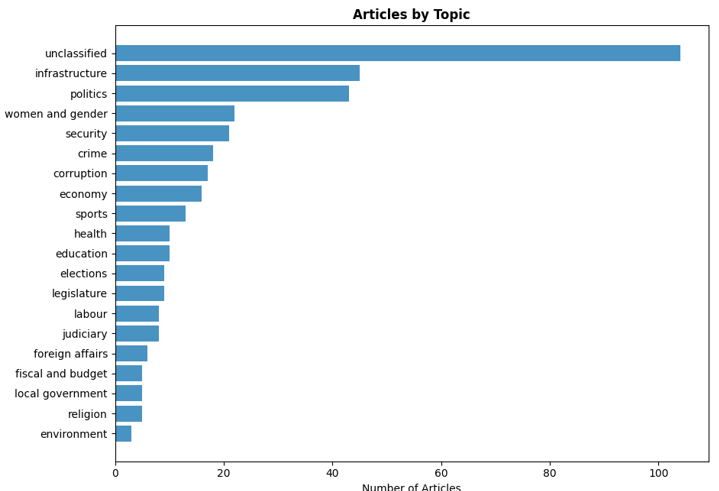
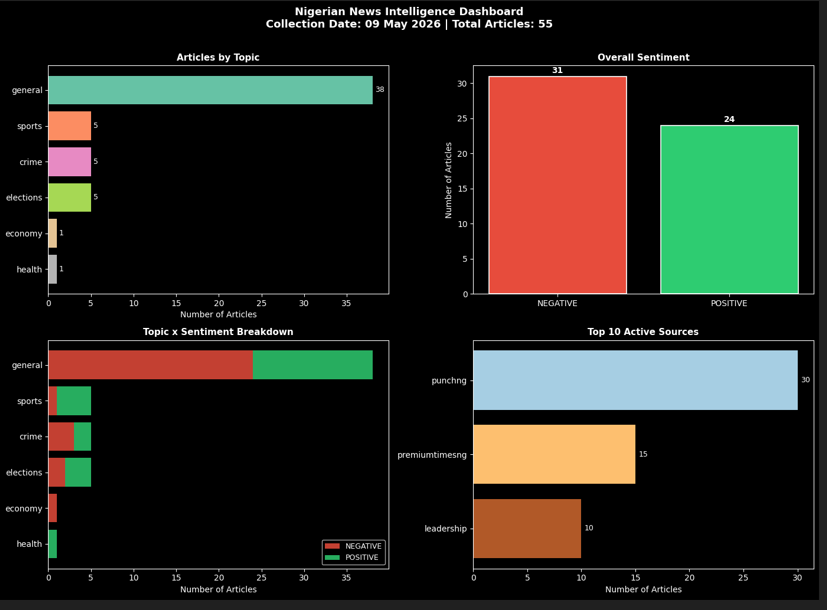
To understand the real significance of this development, however, we need to step back from the coalition story and look at the wider Nigerian news environment. Between August 23 and August 29, the intelligence system tracked 2,118 articles about Nigeria. Politics was the largest classified topic, with 371 articles — more than twice the number recorded in the next category. This tells us that political positioning for 2027 is already becoming a major part of Nigeria’s national conversation, even though the election is still months away.
The wider numbers reinforce this point. Bola Tinubu was mentioned 335 times across the full dataset, making him by far the most-mentioned public figure of the week. Atiku Abubakar followed with 113 mentions, while Wike appeared 33 times. These numbers are important because they show that the coalition story is not an isolated media development. It forms part of a much larger political conversation involving the country’s most visible political actors.
But there is another side to the week’s data that should not be ignored. Of the 2,118 articles analysed, 1,217 had a negative tone, compared with 901 positive stories. In simple terms, more of the week’s news about Nigeria reflected concern than optimism. The average risk score was 0.489 on a scale where 1 represents the highest level of risk. More importantly, 91 articles were classified as CRITICAL and another 400 as HIGH risk.
That means a substantial share of the week’s news was connected to issues serious enough to require attention. Political coalition-building, therefore, cannot be viewed separately from the country’s wider social, economic and security pressures. Political actors may be preparing for 2027, but ordinary Nigerians are still dealing with the problems happening around them today.
Security was one of those pressures. Nigerian troops reportedly dismantled IPOB and ESN strongholds in Anambra and recovered weapons and materials used to make improvised explosive devices. Another report said the military had neutralised an IPOB/ESN fighter in the state. At the same time, a CRITICAL-risk commentary asked whether Nigeria could strengthen security in West Africa through better governance rather than relying mainly on military force.
There was also a HIGH-risk report about a family seeking help after kidnappers demanded ₦17 million for the release of a relative. These stories may appear unrelated to the political calculations taking place in Abuja, but they are connected by one important reality: political stability matters because government decisions ultimately affect the security and wellbeing of ordinary citizens.
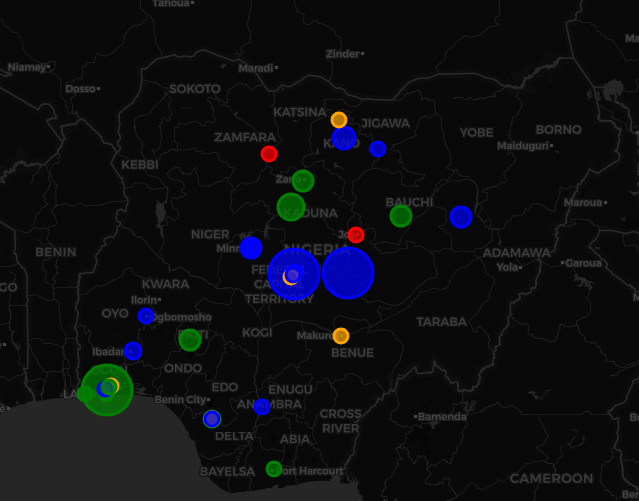
Geography adds another important layer. Abuja recorded 168 mentions during the week, while Lagos recorded 128. Much of Abuja’s coverage was linked to severe flooding, with residents describing the situation as unprecedented in their experience. Lagos, meanwhile, faced infrastructure-related problems, including reports of scavengers stripping bridges and homes.
These developments are important because Abuja and Lagos are not just major cities; they are also central to Nigeria’s political and economic life. While politicians and party leaders were negotiating alliances and building coalitions, residents in these cities were dealing with immediate physical and economic problems. Kaduna and Zamfara, with roughly 40 mentions each, also showed that security concerns in northern Nigeria remain a persistent issue, even when they are not the biggest story of the week.
Another signal from the intelligence data deserves attention. The system identified 123 articles that used positive or celebratory language while reporting events that were classified as high risk. One example involved a governor taking a strong “No Retreat, No Surrender” position against terrorist attacks and the story being presented in a triumphant tone.
This matters because the way a story is presented can influence how people understand the seriousness of an event. A security problem does not become less serious because the language used to describe the government’s response is positive. The same applies to political reporting. Describing opposition parties as simply backing Tinubu may tell only part of the story if the underlying reason is internal weakness or political realignment.
This is why data intelligence must look beyond headlines. It is not enough to know what is being reported; we also need to understand the volume of coverage and the tone of the reporting. The level of risk and what may be receiving too little attention.
One of the clearest examples from this week’s data came from the environment sector. Environment recorded a risk score of 0.95, almost the highest possible level, yet it received only 14 articles — the lowest coverage among the tracked categories. That is an important warning. A story does not have to dominate the news to become dangerous. Some risks grow quietly while public attention is focused elsewhere. Nigeria can spend enormous energy discussing political coalitions in Abuja while serious environmental or regional security risks receive relatively little attention.
When all these signals are brought together, a clearer picture emerges. Wike is simultaneously one of the strongest critics of the opposition and one of the most visible figures in the coalition-building process around Tinubu. That dual role is important because it shows that the political realignment ahead of 2027 is more complicated than a simple government-versus-opposition contest.
The opposition’s internal challenges, including reports of political structures collapsing in Akwa Ibom and disagreements between the PDP and ADC, may be giving the emerging coalition additional momentum. But this political movement is taking place within a much wider national environment — one in which security threats remain active, flooding and infrastructure problems continue to affect major cities, and some of the highest-risk issues receive surprisingly little media attention.
That is why Tinubu’s Rainbow Coalition Is Outpacing Nigeria’s Opposition is more than a story about one political group gaining an advantage over another. It is a snapshot of a country where political realignment, security concerns, infrastructure problems and emerging risks are developing at the same time.
For anyone trying to understand where Nigeria’s politics may be heading, the lesson from this week’s data is straightforward: do not watch only the loudest political story. Looking at only one of these stories gives us only part of the picture.
For policymakers, journalists, political actors and citizens, the real value of intelligence is in connecting these seemingly separate developments. Political momentum does not happen in isolation from the wider condition of the country. What happens in the security, environmental, economic and social space can eventually shape the political space.
That is the gap EphraimHill DC seeks to address week after week: not simply telling you what is making the headlines, but helping you understand what the data says about the bigger picture behind those headlines. The loudest story may tell us what people are talking about. The data can tell us what we should be watching.



















![The Trend of Insecurity in Nigeria. [Part 2]](https://ephraimhilldc.com/wp-content/uploads/2024/09/Computer-Monitoring-of-Remote-areas.png)