
EphraimHill DC- Weekly Civic Data Intelligence | 16 August 2026 | By Idowu Ephraim Faleye
Ademola Adeleke has won the Osun governorship election, but the result is only the beginning of the story. Behind the celebration is an election that entered its final days under the shadow of reported killings, fear and allegations of vote-buying, while a separate security signal was quietly flashing at an even more dangerous level. The EphraimHill Pipeline shows that while Nigeria was watching Osun, another security problem was developing with far less public attention.
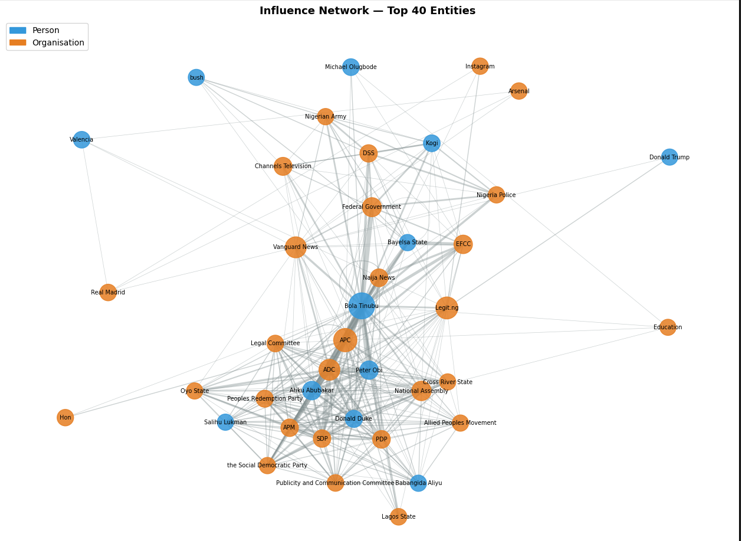
Nigeria ended the week with a declared winner in Osun, but it did not end with all the questions answered. Between August 9 and August 15, 2026, the EphraimHill Pipeline tracked 2,172 news articles from Nigerian and international media, examining their sentiment, risk level, locations, topics and connections. The result is a picture of a country where politics dominated the conversation, Osun became the national political centre, but security emerged as the most serious blind spot in the data.
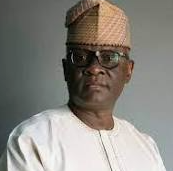
The official result is clear: INEC declared Ademola Adeleke the winner of the Osun governorship election. His campaign celebrated the victory, with the Imole Campaign Council describing him as “a man of the people,” while other supporters publicly congratulated him. But on the same day, SERAP called on INEC, the EFCC and the ICPC to investigate allegations of vote-buying and violence connected to the election, meaning that the declaration of a winner did not automatically close every question surrounding the contest.
Read Also: Frozen Accounts, Fiery Politics: How the EFCC Standoff Changed the Osun Election Story
This is an important distinction. The Centre for Democracy and Development described the election as peaceful despite operational challenges, while SERAP’s call for investigation keeps allegations of vote-buying and violence in the public space. These positions do not necessarily cancel each other out: an election can produce a declared result while some allegations surrounding the process still require investigation. The responsible position is therefore to accept the official result as the result while allowing credible allegations to be properly examined rather than dismissed or treated as proven facts.
The wider numbers explain why this matters. Of the 2,172 articles tracked during the week, 1,113 were classified as medium risk, 507 as low risk, 435 as high risk and 117 as critical, while the average risk score stood at 0.504. In other words, roughly one out of every four stories carried either a high or critical risk classification, showing that the Nigerian information environment was far from calm. Negative coverage also outweighed positive coverage, with 1,267 negative articles compared with 905 positive ones.
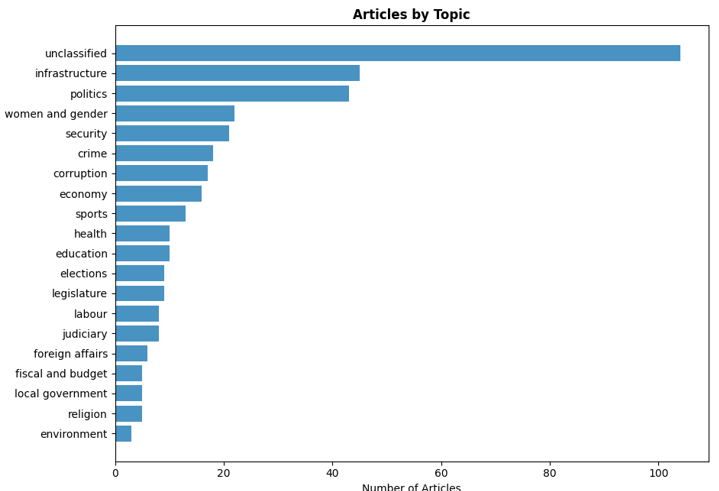
Politics was the most covered identifiable subject, generating 414 articles. Infrastructure followed with 209, the economy with 133, and women and gender issues with 125, while elections accounted for 97 articles, corruption 82, and security 79. At first glance, the relatively low number of security stories compared with politics might suggest that security was not the major concern of the week. The Pipeline tells us that this conclusion would be misleading.
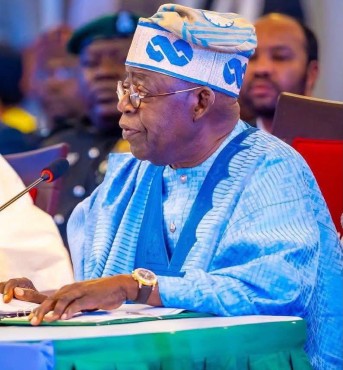
The real political tension was visible even before the votes were counted. President Bola Tinubu held an emergency meeting with 76 APC leaders over Osun, while Atiku Abubakar used the week to attack the government’s economic record and argue that homes and cars were becoming unaffordable for ordinary Nigerians. In Osun, however, the political argument became much more serious when reports emerged that residents were hiding their party colours because of fear following cult-related killings. When people become afraid to publicly identify with a political party, politics has moved beyond ordinary competition and entered the territory of personal security.
The Osun story therefore cannot be understood simply by asking who won. It must also be understood by asking what kind of environment surrounded the election before, during and immediately after voting. Reports of eighteen people being killed in the six days leading to the election, combined with fear among residents, created a serious security dimension around what should fundamentally have been a democratic exercise.
This is also why the location data is important. Nigeria as a whole recorded 595 mentions, Abuja 186 and Lagos 143, but Osun recorded 157 mentions, pushing it ahead of Lagos during the week. That is unusual because Lagos normally attracts far greater national media attention, and Osun’s rise shows just how strongly the election and the surrounding crisis pulled national attention toward the state. The data therefore confirms what Nigerians could already feel from the headlines: Osun temporarily became one of the most important political stories in the country.
Inside Osun, two competing narratives emerged. Oyebamiji’s camp argued that they were the real victims and accused Adeleke of presenting himself as a victim to gain public sympathy, while independent reporting placed the number of deaths at eighteen with days still remaining before the election. When political actors are arguing over who is the real victim while people are still losing their lives, the situation requires more than political statements. It requires neutral investigation, reliable information, and a serious effort to protect citizens.
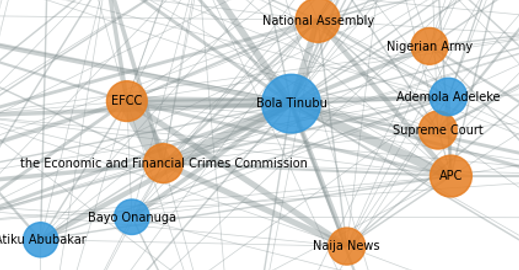
The political attention around Osun also pulled national political figures into the story. Bola Tinubu led the list of the most-mentioned individuals with 219 mentions, followed by Ademola Adeleke with 115, Francis Fadahunsi with 71, Atiku Abubakar with 51 and Peter Obi with 44. Adeleke’s visibility was almost entirely connected to the election and its surrounding violence, while Atiku’s attention was largely connected to his criticism of the economy. The figures show how strongly Osun dominated the national political conversation during the week.
But Nigeria’s political conversation was not limited to Osun. The economy was another major battleground, with Atiku criticising the cost of living and arguing that ordinary Nigerians were struggling to afford basic assets, while Okotie-Eboh offered a very different assessment and argued that President Tinubu had turned the economy around. At the same time, concerns emerged over the possibility of Nigeria losing fresh US health aid worth $1.4 billion because of concerns surrounding Christian persecution. These stories show that Nigeria’s economic story remains deeply contested, with government supporters and critics presenting very different pictures of the country’s direction.
Infrastructure also produced a mixed picture. Governor Sule of Nasarawa credited President Tinubu’s reforms with helping to drive a ₦90 billion infrastructure boom in the state, presenting a positive picture of government investment. But in Lagos, reports of serious vandalism of a bridge forced Governor Sanwo-Olu to reassure residents about safety. Put together, the two stories show that infrastructure development is not simply about building new projects; it is also about protecting, maintaining and managing the assets that already exist.
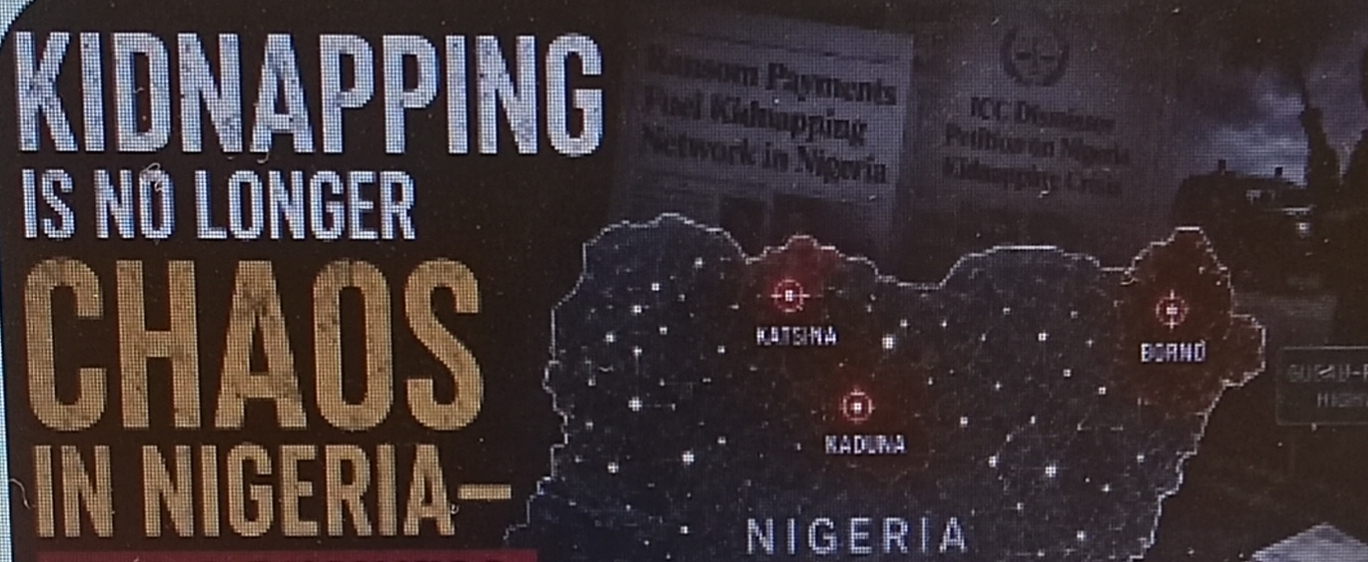
Then comes the part of this week’s DataStory that deserves the most attention: security. Security generated only 79 articles, making it appear much smaller than politics. But the Pipeline’s advanced intelligence signals tell a completely different story, giving the security topic a risk score of 0.92 while showing that it received below-average media attention compared with the level of risk. In simple English, security was one of the most dangerous areas identified by the data, yet it was not receiving the amount of attention that its risk level would suggest.
That gap is a serious warning. A problem does not become less dangerous simply because fewer people are talking about it, and low media attention can sometimes make a dangerous situation harder to detect early. The EphraimHill Pipeline is therefore identifying something that ordinary headline monitoring could easily miss: Nigeria’s biggest security concern this week may not be the security story receiving the most attention.
The evidence behind that warning is also significant. The 117 articles classified as critical were heavily connected to violence, including the attack on Catholic Bishops condemned by the Pentecostal Fellowship of Nigeria, the killings reported in Osun, school closures across 40 local government areas and the Benue burials. Four of the five most critical stories involved either mass violence or its direct human cost. These should not be viewed as four completely unrelated incidents because their concentration in the same week’s critical-risk data points to a broader security environment under pressure.
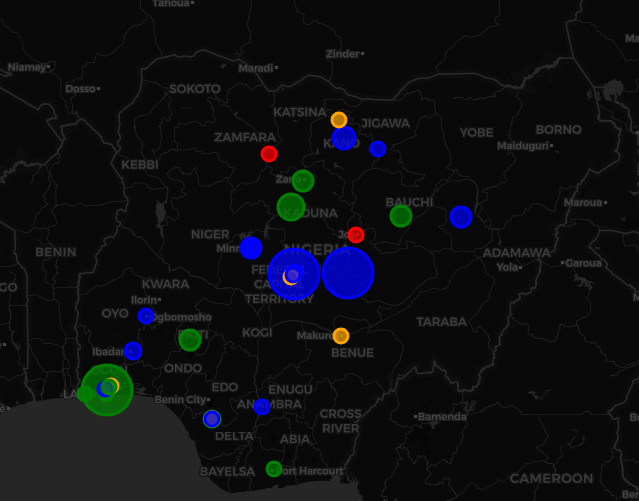
The geographic hotspot analysis takes the warning even further. Adoko recorded the highest risk score in the week’s geographic data, at 0.95, which is higher than the already serious national security-topic score of 0.92. The problem is that many Nigerians may not immediately recognise Adoko or understand why it matters, and that lack of public recognition is precisely what makes the signal important.
According to the Pipeline’s evidence, Adoko refers to the Okene-Auchi axis or locality in Kogi State, connecting Central Nigeria with Edo State. Its forested areas provide places where criminal groups can hide, while the road carries interstate travellers and commercial traffic, creating conditions that can expose people to highway kidnapping. A location with a risk score of 0.95 but limited national attention deserves closer monitoring by security agencies and local journalists before the problem grows into a much larger national story.
There is another important lesson in the data: how serious events are reported can affect how seriously people understand them. The Pipeline identified 114 articles that used positive or neutral language for events that its risk model classified as genuinely high risk, with the Osun election violence story standing out as the clearest example. This does not automatically mean journalists were deliberately hiding the seriousness of the events; it may simply reflect cautious language, the use of quotations or attempts to avoid creating more tension.
But the effect can still matter. Most people do not read every article from beginning to end; many make judgments from headlines and short summaries. If serious events are repeatedly presented in language that sounds less urgent than the underlying facts, the public may underestimate the level of danger. For editors and journalists covering Osun and other security-sensitive areas, the lesson is simple: responsible reporting should avoid creating unnecessary panic, but it should also avoid making serious risks appear ordinary.
So, what should happen next? For Osun, the immediate priority is to move from election competition to institutional review. INEC has declared Ademola Adeleke the winner, and that result should be treated as the official outcome, but allegations of vote-buying and violence should be allowed to follow the proper investigative process. If SERAP’s request for investigations proceeds, the public should be able to see whether the allegations have evidence behind them and what the relevant institutions do with that evidence.
For security agencies, the bigger priority may actually be outside the brightest media spotlight. The 0.92 security risk score and the 0.95 Adoko hotspot should not be treated as just numbers on a dashboard; they are signals pointing security officials toward areas that deserve closer examination. If the data is identifying a high-risk location before it becomes a major national story, that is precisely the moment when preventive action is most valuable.
For journalists and editors, the challenge is to look beyond the stories everyone is already covering. Osun will naturally remain in the news after the election, especially because of the unresolved allegations and the political reactions to the result. But Adoko deserves attention precisely because it does not yet have the same level of public visibility, and the economic debate also requires balanced reporting that allows both the government’s positive assessment and the opposition’s criticism to be examined.
For citizens, there is an equally important lesson. A story receiving the most attention is not necessarily the story carrying the greatest risk, just as a story receiving little attention is not necessarily unimportant. The value of data intelligence is that it helps us look beyond volume and ask a more useful question: Where is the real pressure building?
Osun gave Nigeria a dramatic political ending to the week, with Ademola Adeleke declared the winner of the governorship election. But beneath that headline sits a more complicated picture: reported violence before the election, allegations that still require investigation, a national political conversation heavily drawn toward one state, and a security risk elsewhere that received far less attention than its seriousness deserved.
That is the real story behind this week’s EphraimHill DataStory. Nigeria was arguing loudly about politics and the economy while some of its most serious security signals were developing quietly, and the most important warning may not be the story already dominating the headlines. It may be the story sitting at 0.92 risk, or the location carrying a 0.95 risk score, that most Nigerians have barely heard about. That is the gap EphraimHill DC exists to close: not simply telling you what made the news, but using data to help you see what the news may be missing.
EphraimHill DC is Nigeria’s civic data intelligence platform, where we track, analyse, and interpret national developments to help Nigerians understand the deeper patterns behind public events. Our analysis is institutional, evidence-based, and politically neutral.
Week 33 | August 2026 | Intelligence Pipeline Output































![The Trend of Insecurity in Nigeria. [Part 2]](https://ephraimhilldc.com/wp-content/uploads/2024/09/Computer-Monitoring-of-Remote-areas.png)